

Βραβευμένο με Bib Gourmand στον Οδηγό Michelin, καταχωρισμένο στον έγκριτο οινικό θεσμό Star Wine List, με τρεις οινοχόους να υπηρετούν με πάθος το κρασί, εντυπωσιακός χώρος, ιδανικός για φωτογράφιση και, το πιο βασικό, μια κουζίνα που εκπροσωπεί με τον πιο γευστικό τρόπο την αγαπημένη όλων, ιταλική κουζίνα. Τι να παραθέσω άλλο για να σου εκθειάσω το Le Braci, δεν ξέρω ούτε εγώ;
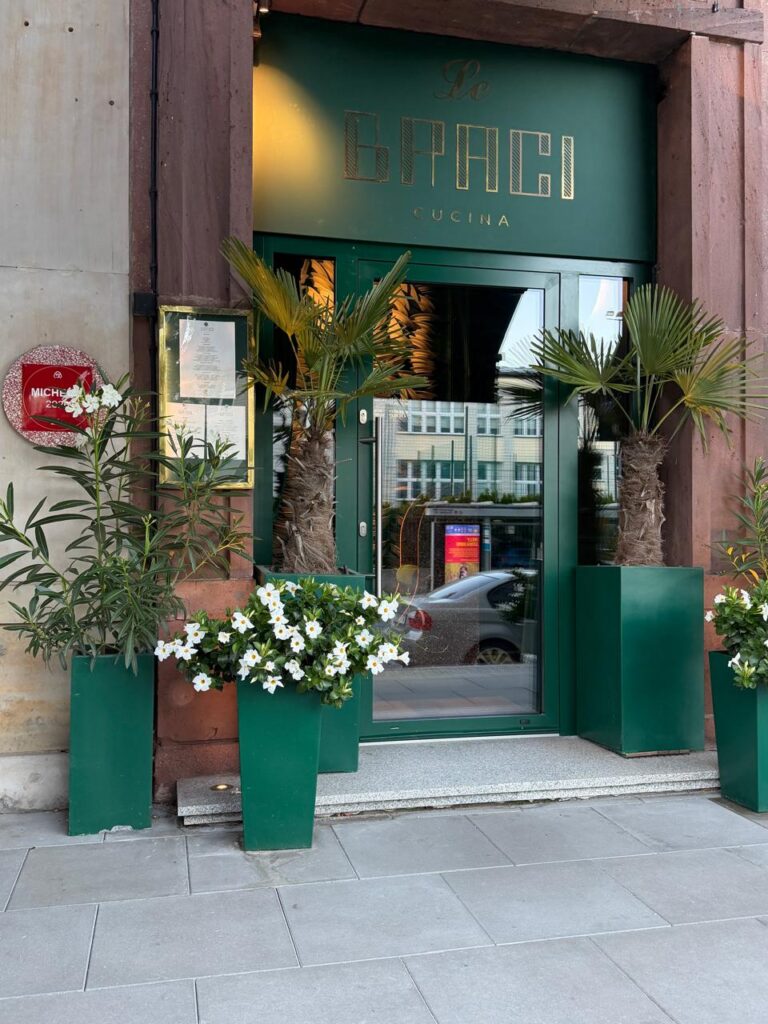
Βαλμένο σε μία από τις πιο πράσινες και όμορφες γωνιές της Βαρσοβίας, δίπλα στους μεγάλους χώρους πρασίνου της περιοχής, στα σύνορα του πάρκου Marszałka Edwarda Rydza-Śmigłego και κοντά στον Βιστούλα ποταμό, σε μια γειτονιά όπου συνυπάρχουν πρεσβείες, αριστοκρατικές οικίες και εκείνη η κομψότητα της πόλης που δεν χρειάζεται να φωνάξει για να γίνει αντιληπτή. Το Le Braci έχει και τη δική του πράσινη ανάσα, με τη βεράντα του να πλημμυρίζει από φυτά, όμως είναι το εσωτερικό που σε κερδίζει από την πρώτη στιγμή.
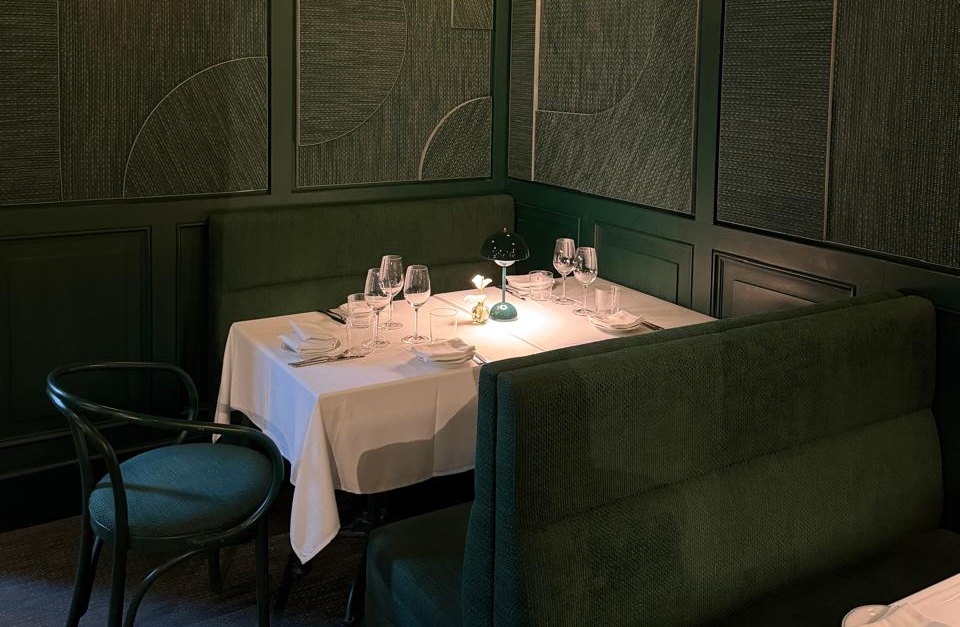
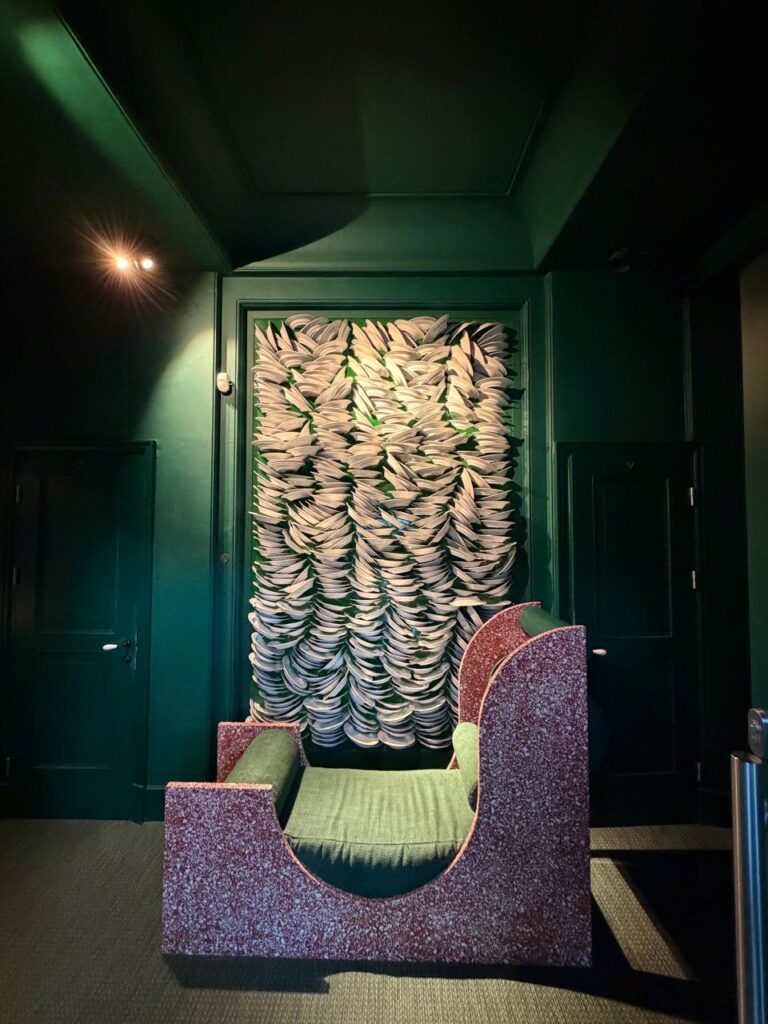
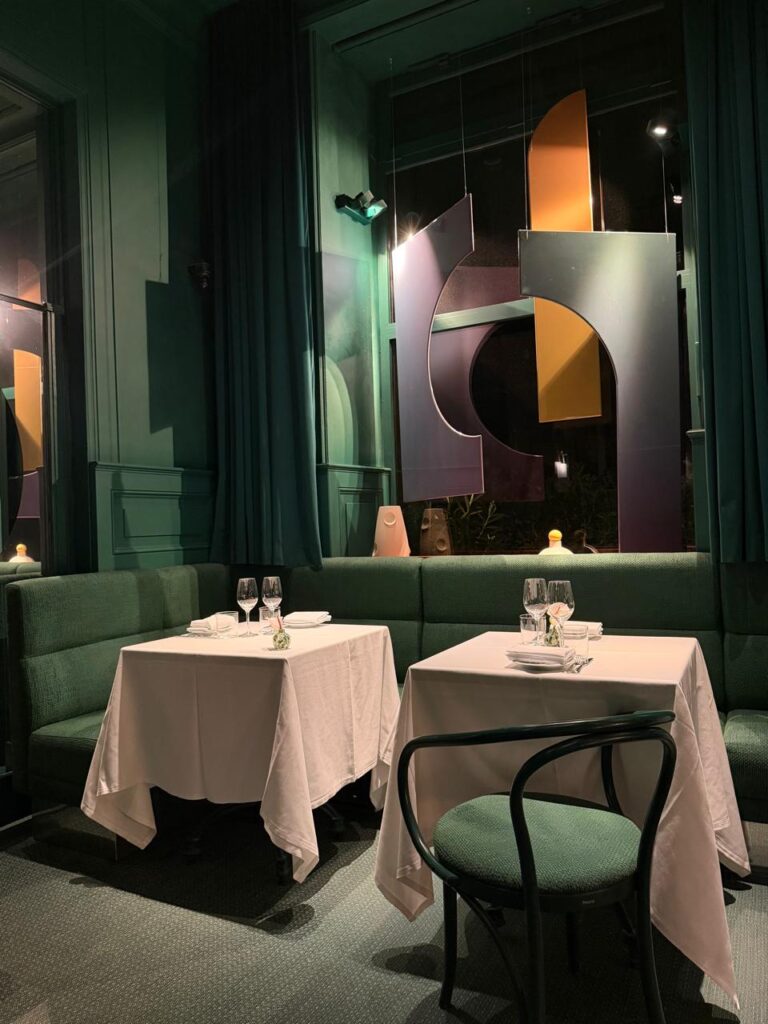
Πράσινο παντού, από τους τοίχους μέχρι την οροφή και το πάτωμα, λευκά τραπεζομάντιλα, κοκκινοπορτοκαλιές λεπτομέρειες και εκείνο το όμορφο zinc bar που δίνει έναν ελαφρώς clubby χαρακτήρα στον χώρο. Και ανάμεσα σε όλα αυτά, οι καλαίσθητες κάβες που σε προειδοποιούν διακριτικά πως εδώ το κρασί δεν είναι απλώς συνοδευτικό. Είναι μέρος της γαστρονομικής φιλοσοφίας.
Και τώρα, κράτα αυτό.
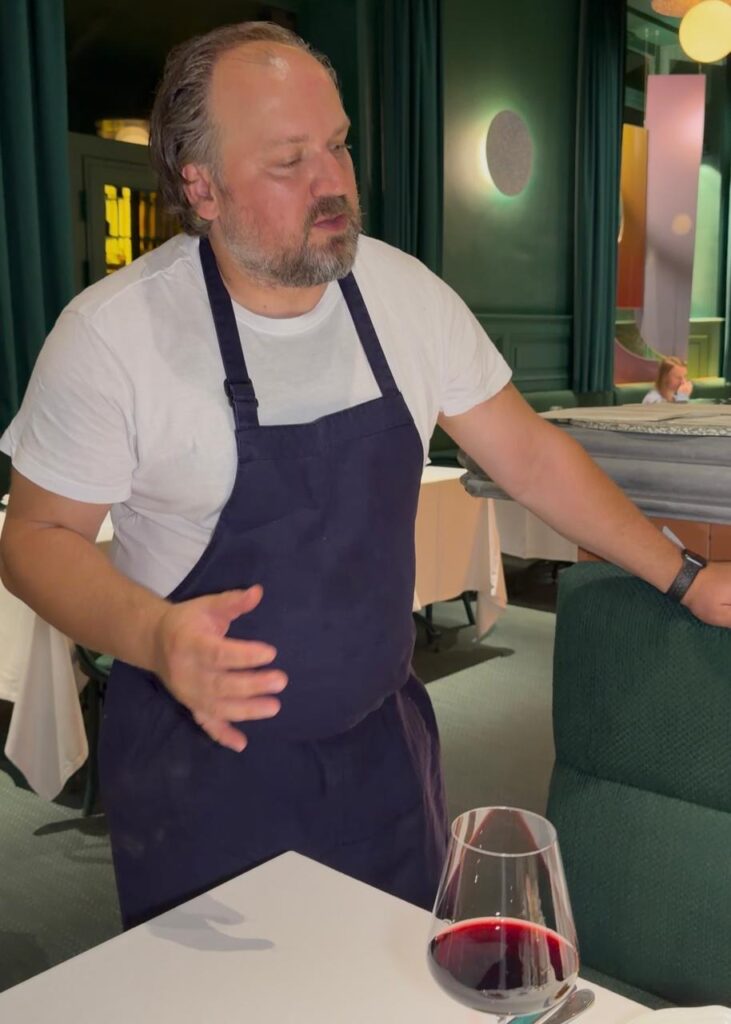
Πίσω από την κουζίνα βρίσκεται ο Przemysław Samul, ο Πολωνός chef που πέρασε περισσότερα από 15 χρόνια στο Λονδίνο, δουλεύοντας δίπλα σε σημαντικούς Ιταλούς chefs, περνώντας, μεταξύ άλλων, από το Harry’s Bar, το Maze του Gordon Ramsay, το Loulou’s Club και το Berkeley Hotel London. Μετά την επιστροφή του στην Πολωνία, ανέλαβε τη γαστρονομική διεύθυνση του Stara Wozownia στο Pałac Mała Wieś και στη συνέχεια πήρε στα χέρια του την κουζίνα του Le Braci. Και θα σου πω κάτι από την αρχή: Ξέρει πολύ καλά τι κάνει, έχει παλέτο και αυτή τη σπάνια ικανότητα να δημιουργεί γευστικά μεγαλεία, βασισμένα στην αυθεντία της ιταλικής κουζίνας. Αυτό κι αν είναι επίτευγμα.
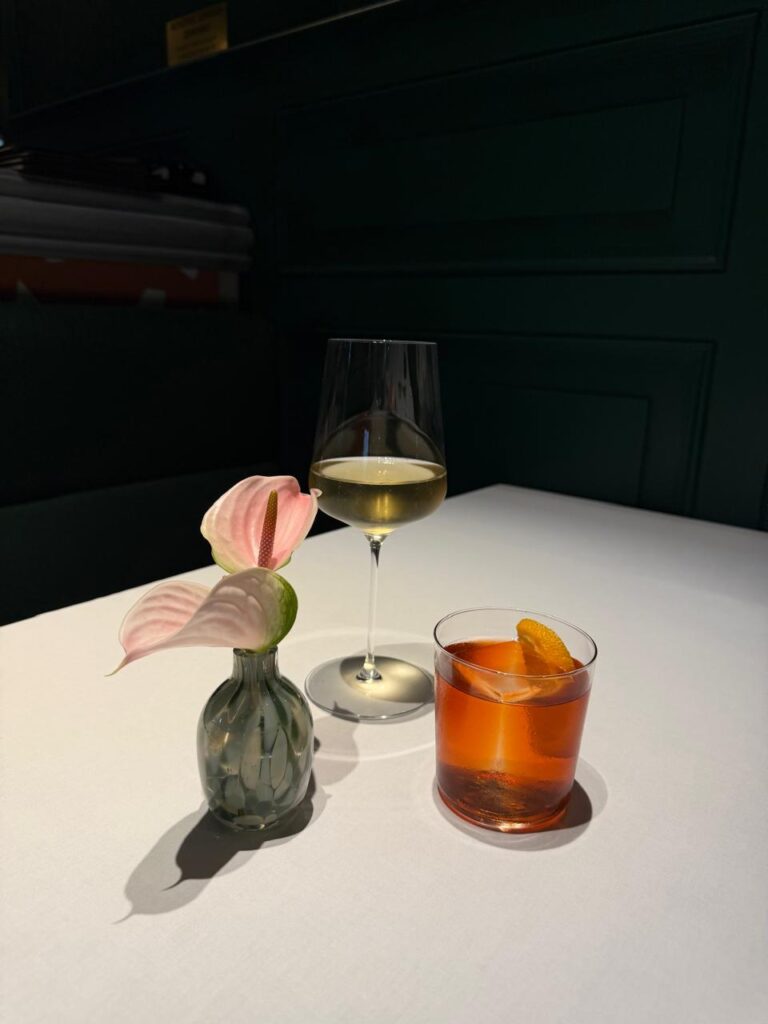
Το καλωσόρισμα ήρθε με ένα Yacobus Sekt από τη Winnica Jakubów, méthode traditionnelle, ένα πολωνικό αφρώδες που αποδεικνύει από την πρώτη γουλιά πως η Πολωνία έχει πλέον κάθε λόγο να μας απασχολεί και στο κρασί. Η δεύτερη ζύμωση στη φιάλη και η παραμονή του στις οινολάσπες του χαρίζουν εκείνη την πιο κρεμώδη υφή και τους διακριτικούς ψωμένιους και ζυμωτικούς τόνους που περιμένεις από ένα καλοφτιαγμένο, παραδοσιακής μεθόδου αφρώδες.
Και δίπλα του, ένα house Negroni, με τα σάκχαρά του τόσο όμορφα ισορροπημένα, που αν δεν γνώριζα την οινική συνέχεια που θα ακολουθούσε από τους σομελιέ της βραδιάς, πολύ πιθανόν να ζητούσα ακόμη ένα.
Ξεκινήσαμε από τα snacks.
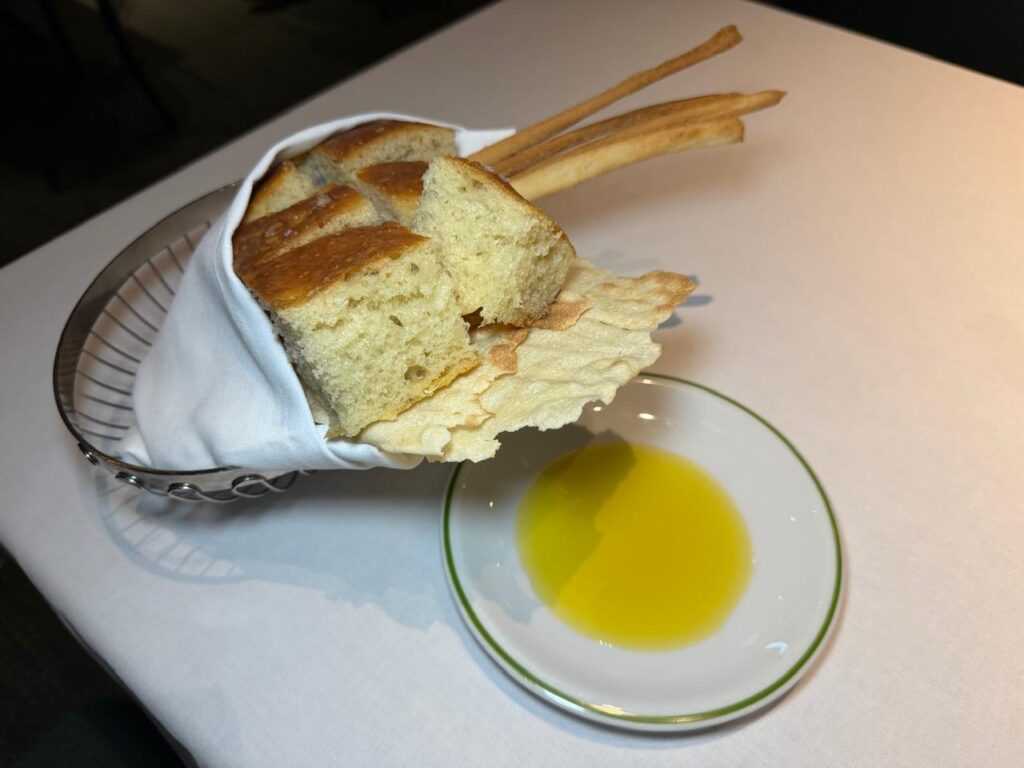
Grissini, focaccia, λεπτόφυλλο pane carasau – όλα τους, φυσικά, χειροποίητα – μαζί με το εξαιρετικό αγνό παρθένο ελαιόλαδο Magrille, που παράγεται και εμφιαλώνεται ειδικά για το Le Braci. Μικρά Bolognese focaccia στη συνέχεια, σαν μίνι σάντουιτς, που έκλειναν μέσα τους ιταλικό χαμ και τυρί, με την τρούφα να εμφανίζεται όσο πρέπει, χωρίς να καπελώνει τα υπόλοιπα.
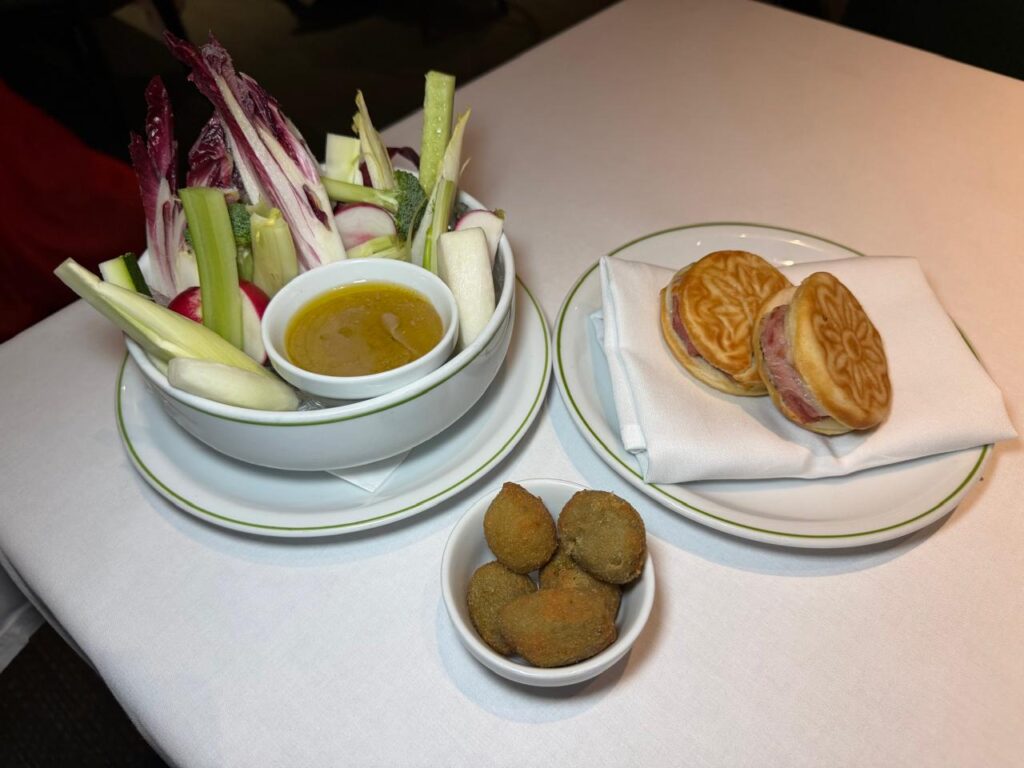
Οι ελιές Ascolane με pancetta στην καρδιά της ελιάς, έφεραν εκείνη την τραγανή, νόστιμη αμαρτία που δεν χρειάζεται πολλές συστάσεις.
Μα τα crudités με τη Bagna Cauda σος ήταν για μένα κάτι περισσότερο. Τα πιο τρυφερά φρέσκα λαχανικά, βουτηγμένα στην παραδοσιακή ζεστή σος του Πιεμόντε, όπου η αντζούγια δεν φώναζε αλάτι και το σκόρδο δεν έβγαινε μπροστά να πάρει το πιάτο επάνω του. Έβγαζε θάλασσα. Καθαρή, φίνα θαλασσινή αίσθηση. Ένα παραδοσιακό ορεκτικό που, όταν εκτελείται σωστά, σου θυμίζει γιατί η ιταλική κουζίνα δεν χρειάζεται ποτέ περιττά στολίδια.
Και κάπου εδώ μπήκε στο ποτήρι το Riblesso Rosi 2022 από τη Vallagarina. Ένα κρασί που με το πιο σκούρο, σχεδόν θολό ροζ χρώμα του, σου δίνει αμέσως την εντύπωση πως δεν έχει έρθει για να παίξει τον ρόλο του συνηθισμένου rosé. Πιο άγριο, πιο ζωντανό, με χαρακτήρα που ταίριαξε υπέροχα με όσα θα ακολουθούσαν.
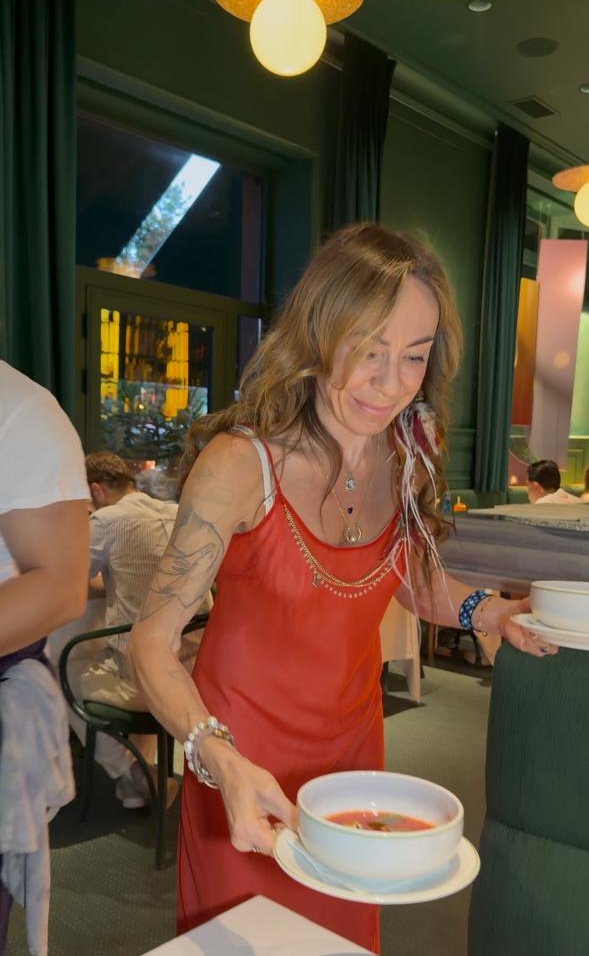
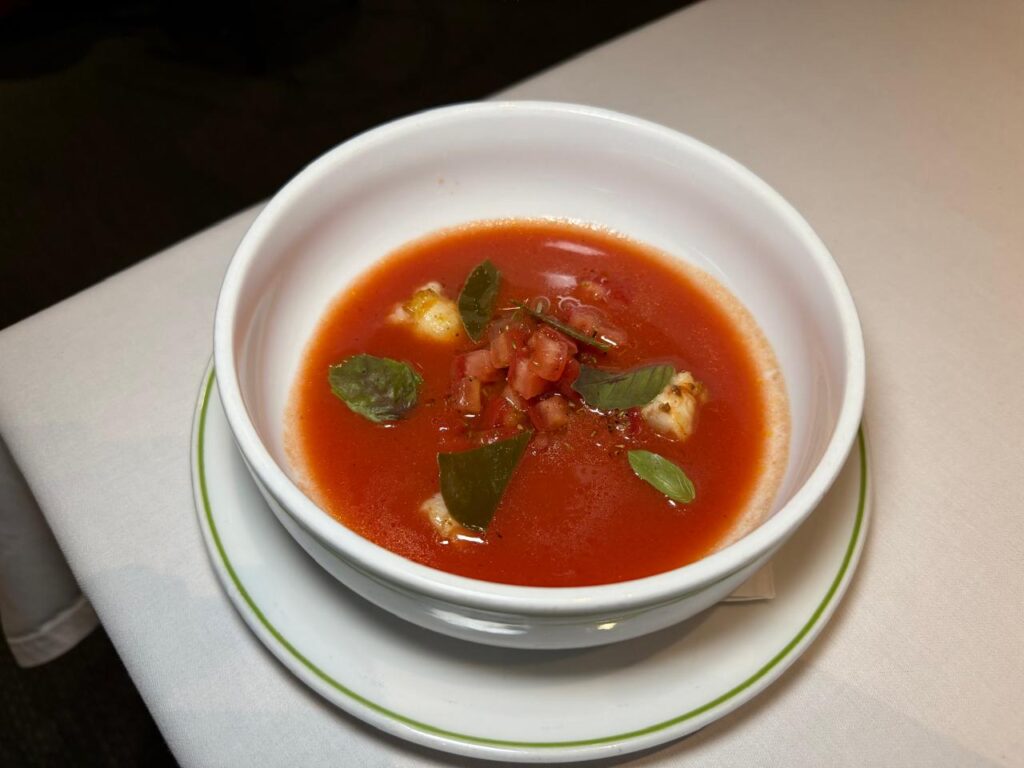
Η παγωμένη σούπα από San Marzano ντομάτες με καραβίδα σχάρας, brunoise ντομάτα και μυρωδικά ήταν ένα μικρό μάθημα στην αξία της πρώτης ύλης. Όταν έχεις μπροστά σου μια πραγματικά σπουδαία ντομάτα, δεν χρειάζεται να την κρύψεις. Την αφήνεις να μιλήσει. Κι εδώ μίλησε καθαρά, γλυκά, με οξύτητα και βάθος, ενώ η καραβίδα έδωσε εκείνη την αλμυρή θαλασσινή πινελιά και το ουμάμι της σχάρας που έδεσε το σύνολο.
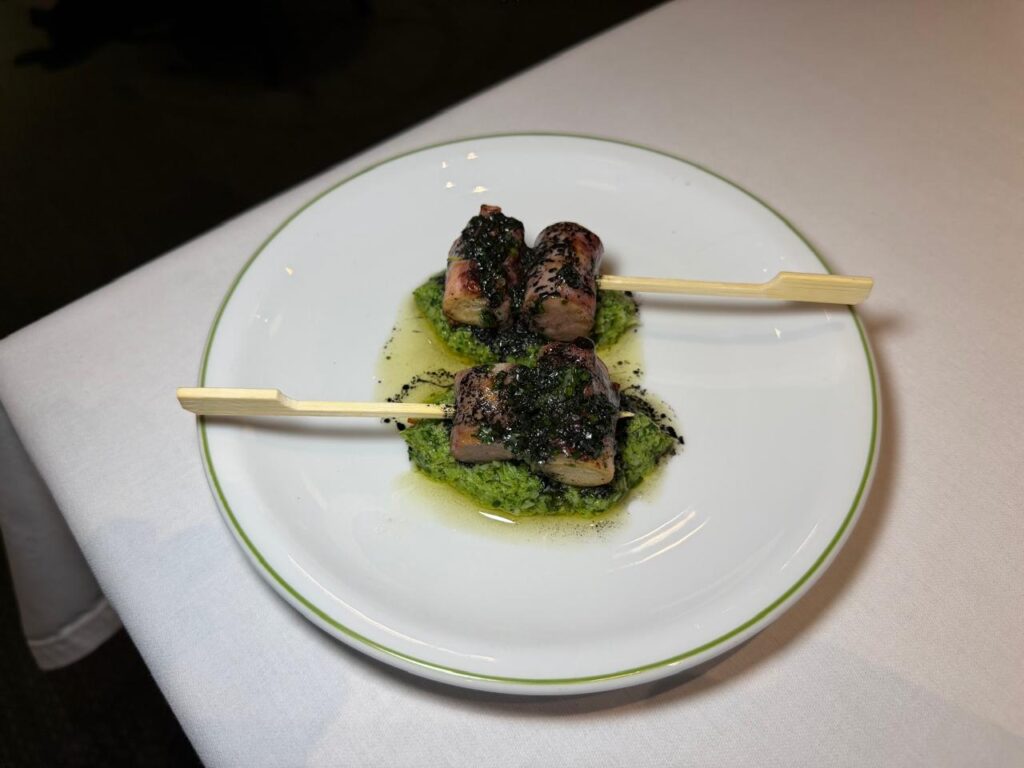
Όταν εμφανίστηκε το ξυλάκι με σχαροψημένο χταπόδι και λουκάνικο, έγινε μια μικρή συνάντηση γης και θάλασσας. Το χταπόδι και το λουκάνικο βρέθηκαν μαζί με το θρυμματισμένο μπρόκολι, με το μελάνι σουπιάς να λειτουργεί σαν γέφυρα ανάμεσα στις δύο γεύσεις. Και το ενδιαφέρον ήταν πως τα καρυκεύματα του λουκάνικου δεν χάθηκαν μέσα στο μελάνι. Αντίθετα, έγιναν ένα μαζί του.
Και μετά ήρθε το Tuna tartare.
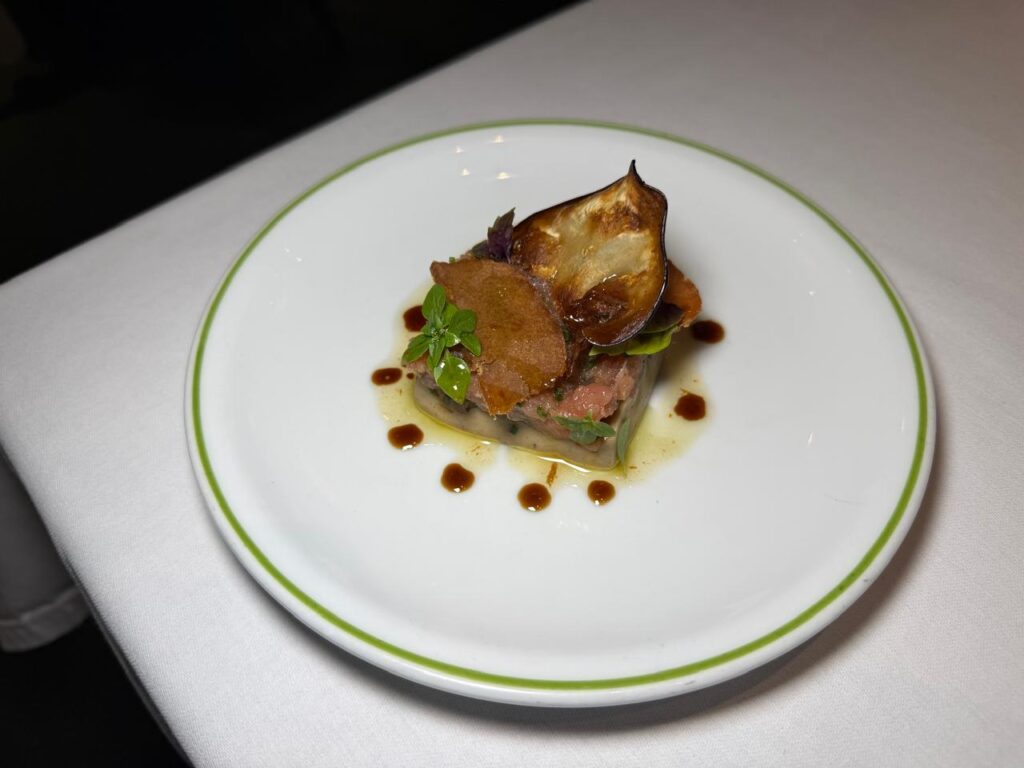
Από εκείνα τα πιάτα που, αφού τα φας, επιστρέφεις νοερά στην πρώτη μπουκιά για να την ξαναζήσεις. Τόνος, πουρές μελιτζάνας, διακριτική Colatura di Alici (σάλτσα από ωριμασμένες αντσούγιες), λεπτοκομμένη τραγανή μελιτζάνα και από πάνω αυγοτάραχο τόνου. Πληθωρικό, βαθύ, με αλμυρότητα που δεν ενοχλούσε, γήινη γλύκα και τραγανότητες που αλλάζουν συνεχώς τη μπουκιά. Ένα από τα καλύτερα ορεκτικά που έχω δοκιμάσει τους τελευταίους μήνες και, όπως μας εξήγησαν, ένα πιάτο που δικαιολογημένα δεν έφυγε σχεδόν ποτέ από το μενού του Le Braci από τα γεννοφάσκια του. Εδώ, πραγματικά, δεν είχαμε να κάνουμε απλώς με μια καλή ιταλική συνταγή. Είχαμε να κάνουμε με μια κουζίνα που ξέρει πώς να παίρνει την παράδοση και να της δίνει σημερινό παλμό.
Στο επόμενο οινικό κεφάλαιο, δύο λευκά βρέθηκαν αντιμέτωπα με δύο πιάτα ζυμαρικών και η σύγκριση είχε εξαιρετικό ενδιαφέρον.
Το Bianco del Casal 2024 της Ca’ La Bionda, από τη Valpolicella είναι ένα λευκό που δημιουργείται σε μια περιοχή που όλοι σχεδόν έχουμε μάθει να συνδέουμε με τα μεγάλα κόκκινα της, το οποίο ήρθε με φρεσκάδα, φρούτο και μια όμορφη αίσθηση δομής. Η Ca’ La Bionda έχει καταφέρει να δώσει στο Bianco del Casal έναν χαρακτήρα που ξεφεύγει από τα αναμενόμενα της περιοχής.
Απέναντί του, το VRH La Castellada Cru 2016. Εδώ αλλάζουμε εντελώς γήπεδο. Friuli-Venezia Giulia, Chardonnay και Sauvignon Blanc, δύο μήνες skin maceration, χρόνια ωρίμανσης και ένα πορτοκαλί κρασί με σώμα, δομή και απίστευτο βάθος.
Και πάμε στα ζυμαρικά.
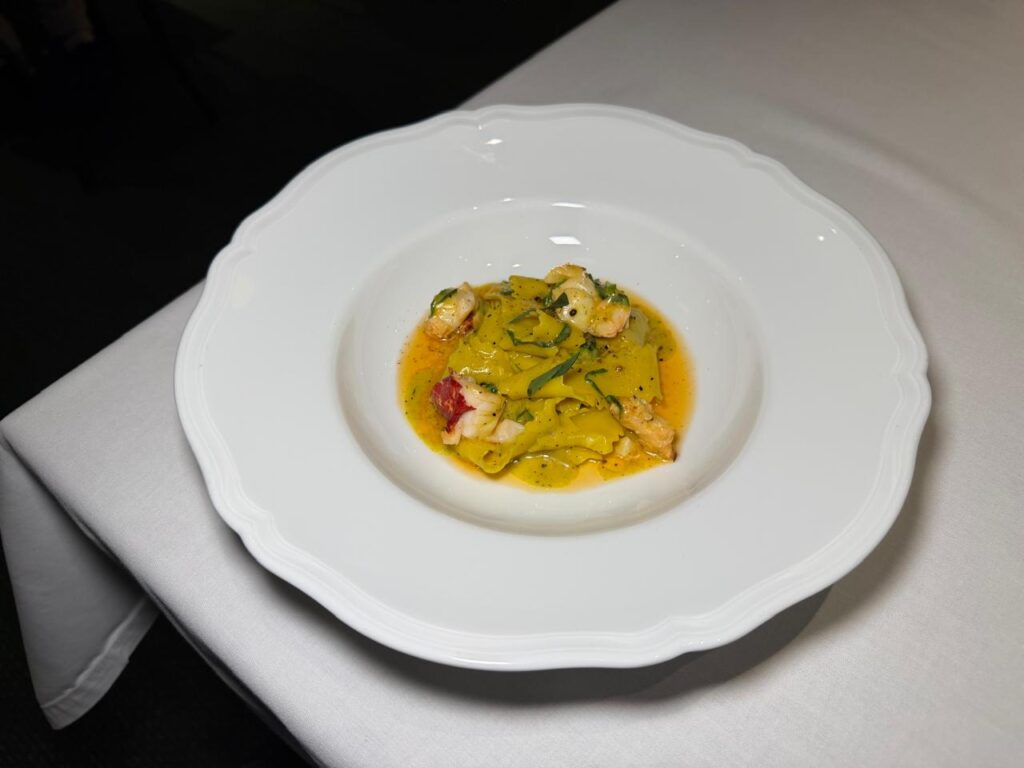
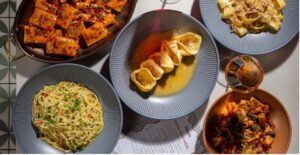
Σπιτικές al dente ταλιατέλες, από εκείνες που σπάνια συναντάς πλέον με τέτοια ακρίβεια, έγιναν η βάση για την Carbonara με μπλε αστακό, τάραγκον και ελαιόλαδο. Ένας συνδυασμός που στην αρχή μπορεί να σε κάνει να σηκώσεις λίγο το φρύδι. Μετά όμως έρχεται η πρώτη μπουκιά και το φρύδι κατεβαίνει αμέσως. Ο αστακός, όμορφα ψημένος, η κρεμώδης αίσθηση της carbonara, η φρεσκάδα του εστραγκόν και το ελαιόλαδο, όλα σε μια αρμονία που δεν άφηνε κανένα υλικό να κλέψει την παράσταση. Πιάτο που από μόνο του σου δίνει έναν πολύ καλό λόγο για να επιστρέψεις.
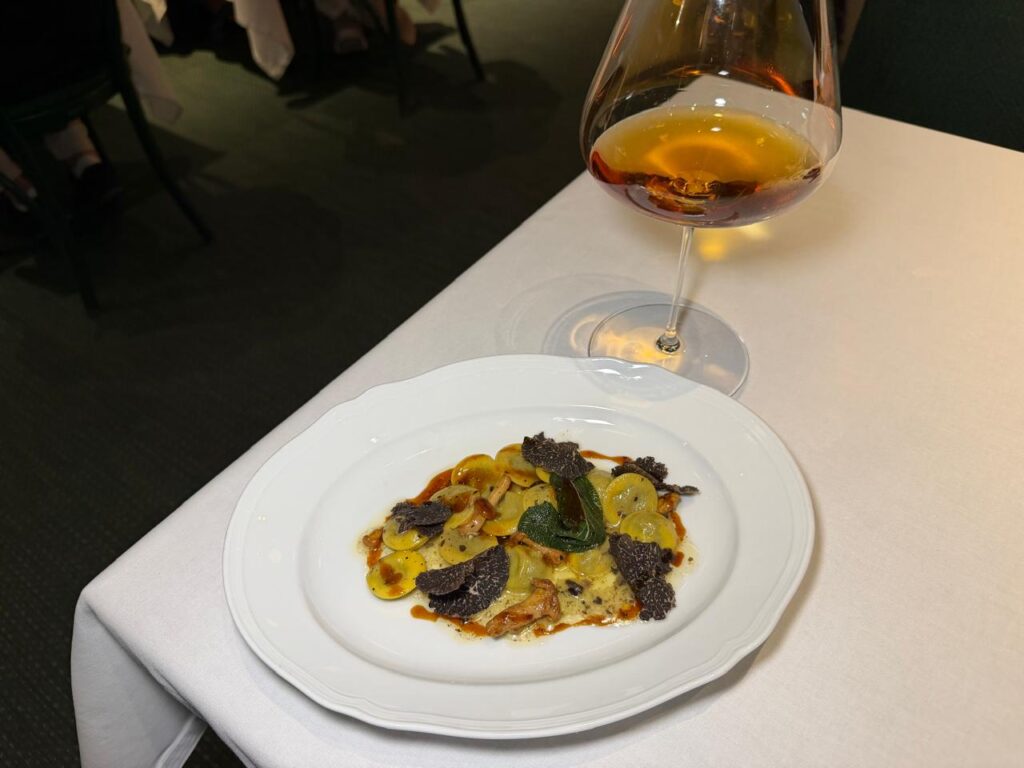
Κι αν η carbonara με μπλε αστακό ήταν η μεγάλη έκπληξη, τα bottoncini ήταν η μικρή γαστρονομική λεπτομέρεια που μας έκανε να ξαναχαμογελάσουμε και να στείλουμε ευθύς, για πολλοστή φορά, τα εύσημα στον σεφ και στην μπριγάδα του. Μικροσκοπικά, σαν κουμπιά, ωσάν mini ravioli, γεμισμένα με Wagyu βοδινό, συνοδευμένα με κανθαρέλλες και nero pregiato truffle, με λίγο φασκόμηλο, περασμένο από τηγάνι, να δίνει το τελευταίο άγγιγμα. Μπουκιά μικρή στο μάτι, μεγάλη στο στόμα. Τα μανιτάρια έδιναν γήινο βάθος, η τρούφα το αρωματικό της πέπλο και το φασκόμηλο εκείνη την ελαφριά πικάντικη τραγανότητα που χρειάζεται ένα τόσο πλούσιο πιάτο.
Και τότε, στο ποτήρι μας, ήρθε ένα Batàr Toscana 2016 της Querciabella. Και να σου πω κάτι; Υπάρχουν κρασιά που τα δοκιμάζεις και υπάρχουν κρασιά που τα παρακολουθείς να εξελίσσονται μέσα στο ποτήρι. Το Batàr ανήκει στη δεύτερη κατηγορία. Ένα από τα εμβληματικά λευκά της Τοσκάνης, με Chardonnay και Pinot Bianco, που μετά από χρόνια παλαίωσης έχει αποκτήσει ακόμη μεγαλύτερη πολυπλοκότητα, χωρίς να χάσει τη φρεσκάδα του. Λεμόνι, μανταρίνι, ανθικά στοιχεία, αμύγδαλο, σαφράν και εκείνη η λεπτή αλμυρότητα που το κρατά ζωντανό.
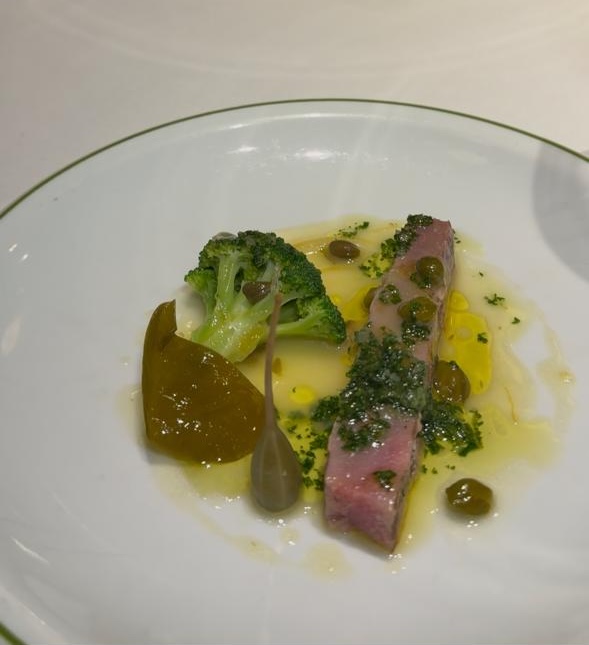
Και απέναντί του, ένα πιάτο που θα χαρακτήριζα μαμαδίστικο και ταυτόχρονα σχεδόν μισελενάτο. Στέικ τόνου, σάλτσα λεμονιού, κάπαρη και μπρόκολο. Τόνος απίστευτα σωστά ψημένος, ζουμερός στο εσωτερικό, με τη λεμονάτη σάλτσα και την κάπαρη να του δίνουν την απαραίτητη οξύτητα. Μια γεύση που σε στέλνει Ιταλία χωρίς να χρειάζεται να σου το εξηγήσει κανείς. Από εκείνες τις περιπτώσεις που το φαγητό δεν προσπαθεί να γίνει εξεζητημένο. Απλώς είναι πολύ καλά μαγειρεμένο.
Και φτάσαμε στο τελευταίο κυρίως. Οινικός του συνοδοιπόρος το Le Macchiole Scrio 2020. Ένα κρασί που από μόνο του αξίζει μια παράγραφο. 100% Syrah από το Bolgheri, σπάνιο και σε πολύ μικρή παραγωγή. Με λίγα λόγια ένα από τα κρασιά που έχουν καταφέρει να κάνουν την ποικιλία Syrah να αποκτήσει ξεχωριστή ταυτότητα στην Τοσκάνη. Το ίδιο το οινοποιείο το χαρακτηρίζει σημείο αναφοράς για την περιοχή, ενώ η εσοδεία του 2020 έχει συγκεντρώσει εξαιρετικές κριτικές, μεταξύ άλλων 97 από τον Robert Parker και τον Jeb Dunnuck και 96 από Vinous και Wine Enthusiast.
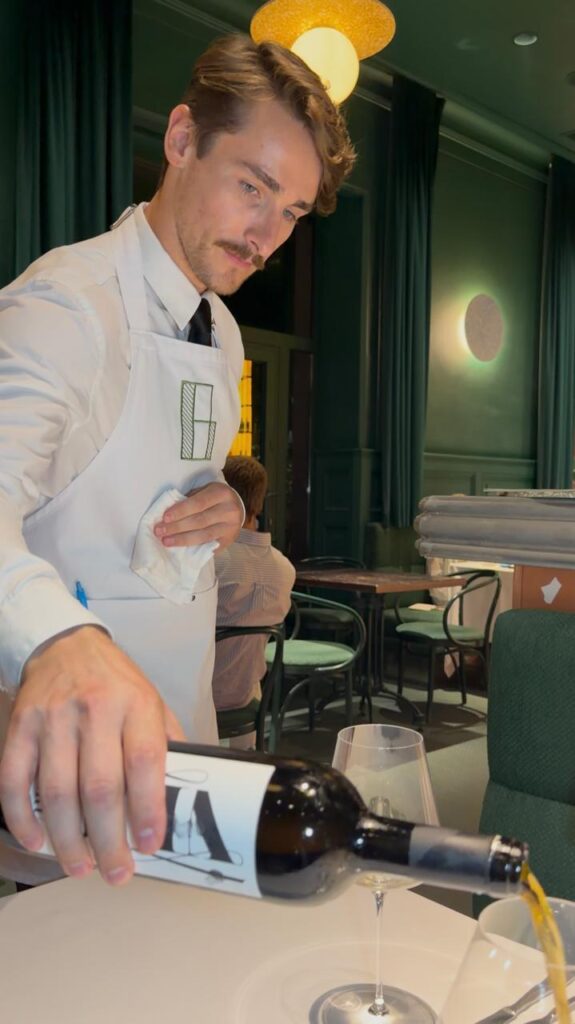
Βαθύ, πικάντικο, με μαύρο φρούτο, μαύρη ελιά, πιπέρι και εκείνη τη σκοτεινή, σχεδόν σοκολατένια πλευρά που το κάνει τόσο γοητευτικό. Ένα κρασί που μπορούσε να σταθεί απέναντι σε ένα πραγματικά σοβαρό κομμάτι κρέατος.
Και το κομμάτι αυτό ήρθε.
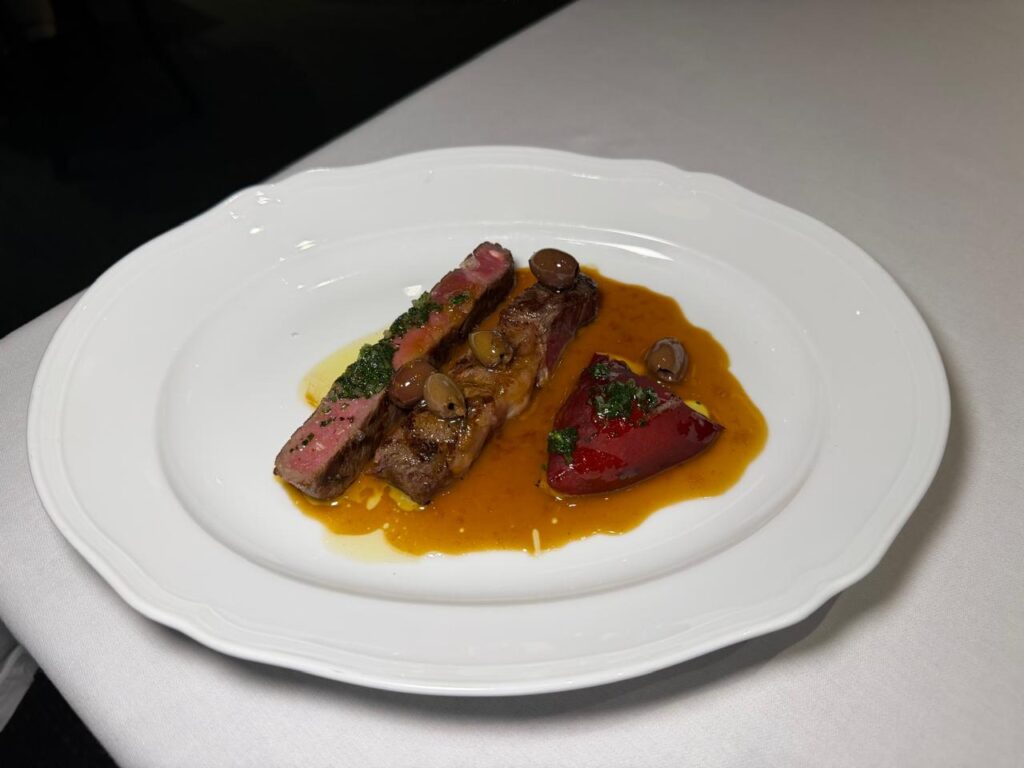
Wagyu rib eye από τη Ναμίμπια. Εξωτερικά υπέροχα θωρακισμένο και εσωτερικά ζουμερό, τρυφερό, με το λίπος του να λιώνει όπως ακριβώς πρέπει. Μαζί του ρόκα, ελιές και πιπεριά σε μια σος που έκανε κάτι πολύ σημαντικό. Δεν προσπάθησε να κλέψει την παράσταση από το κρέας. Το υποστήριξε. Κι αυτό, σε μια κουζίνα υψηλού επιπέδου, είναι μεγάλη υπόθεση.
Μελετώντας στο ενδιάμεσο την οινοκάρτα, ταξίδεψα πολύ. Η λίστα είναι ξεκάθαρα ιταλοκεντρική και καλύπτει ολόκληρη την Ιταλία, από τον βορρά μέχρι τον νότο, με μικρούς παραγωγούς, σπάνιες ετικέτες και διαφορετικές χρονιές, αλλά δεν σταματά εκεί. Φιλοξενεί σπουδαίες επιλογές από τον διεθνή αμπελώνα και, κυρίως, δίνει πολύ σοβαρό χώρο στην avant-garde του πολωνικού κρασιού.
Και πίσω από αυτήν τη δουλειά βρίσκονται τρεις άνθρωποι.
Η διευθύντρια και Head Sommelier Kamila Dzierżawska, με την τεράστια εμπειρία της, κατάφερε κάτι που για μένα είναι ίσως η μεγαλύτερη επιτυχία ενός επαγγελματία φιλοξενίας. Μας έκανε να νιώσουμε ότι δεν μας φιλοξενεί απλώς στο εστιατόριό της. Μας φιλοξενεί στο σπίτι της. Επαγγελματίας, γνώστης του κρασιού και του φαγητού, περήφανη για τη δουλειά της και για τον chef της, αλλά χωρίς ούτε ίχνος έπαρσης. Και αυτή η αυθεντικότητα περνάει κατευθείαν στον επισκέπτη.
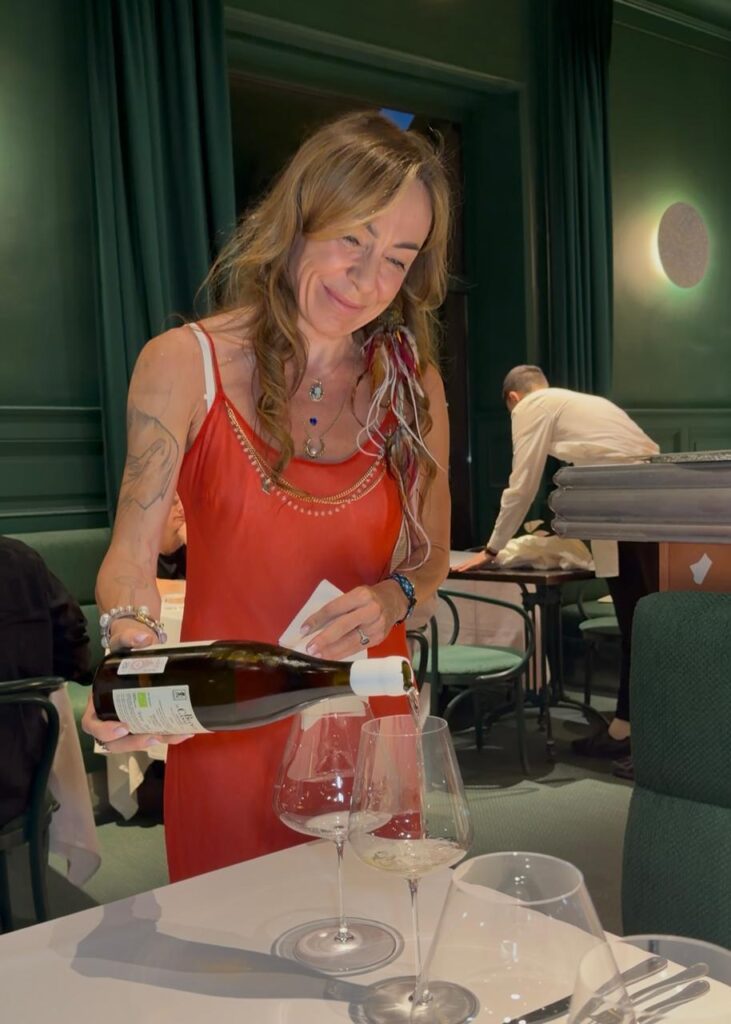
Ο Mikołaj Borsuk, από την άλλη, τεκμηρίωνε με έναν πραγματικά εντυπωσιακό τρόπο τους οινογαστρονομικούς συνδυασμούς, εξηγώντας όχι μόνο τι πίνουμε, αλλά κυρίως γιατί το συγκεκριμένο κρασί βρίσκεται μπροστά στο συγκεκριμένο πιάτο.
Μαζί με τον Kamil Świerczyński, συμπληρώνουν μια τριάδα που δίνει στο Le Braci μια οινική ταυτότητα πολύ μεγαλύτερη από αυτή που περιμένεις όταν ακούς απλώς “ιταλικό εστιατόριο”.
Και κάπου εδώ, το δείπνο θα μπορούσε να είχε ολοκληρωθεί. Αλλά όχι. Ήρθαν τα γλυκά και μαζί τους δύο ακόμη οινικές προτάσεις, που έδωσαν στο τέλος της βραδιάς έναν σχεδόν συλλεκτικό χαρακτήρα.
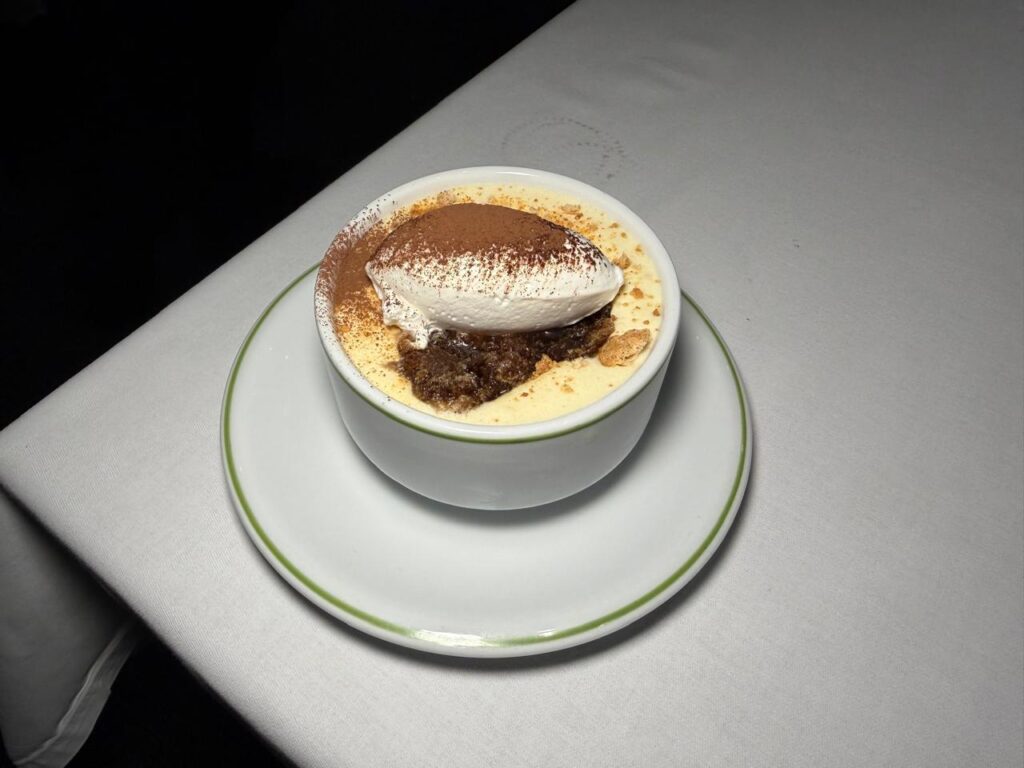
Πρώτο, το πολωνικό Cydr Chyliczki Cydr Lodowy 2022. Ice cider, φυσικά γλυκό, με τη συμπύκνωση του μήλου να δίνει μεγαλύτερη ένταση και πυκνότητα στο φρούτο. Όμορφη επιλογή για να συνοδεύσει ένα γλυκό που δεν χρειάζεται να είναι υπερβολικά γλυκό. Το Le Braci tiramisu ήταν ακριβώς αυτό. Κρεμώδες, με ποικιλία μπισκότων, ήπια γλυκύτητα και εκείνη τη γνώριμη ιταλική άνεση που σε κάνει να θέλεις να πάρεις άλλη μια κουταλιά πριν ακόμη τελειώσεις την προηγούμενη.
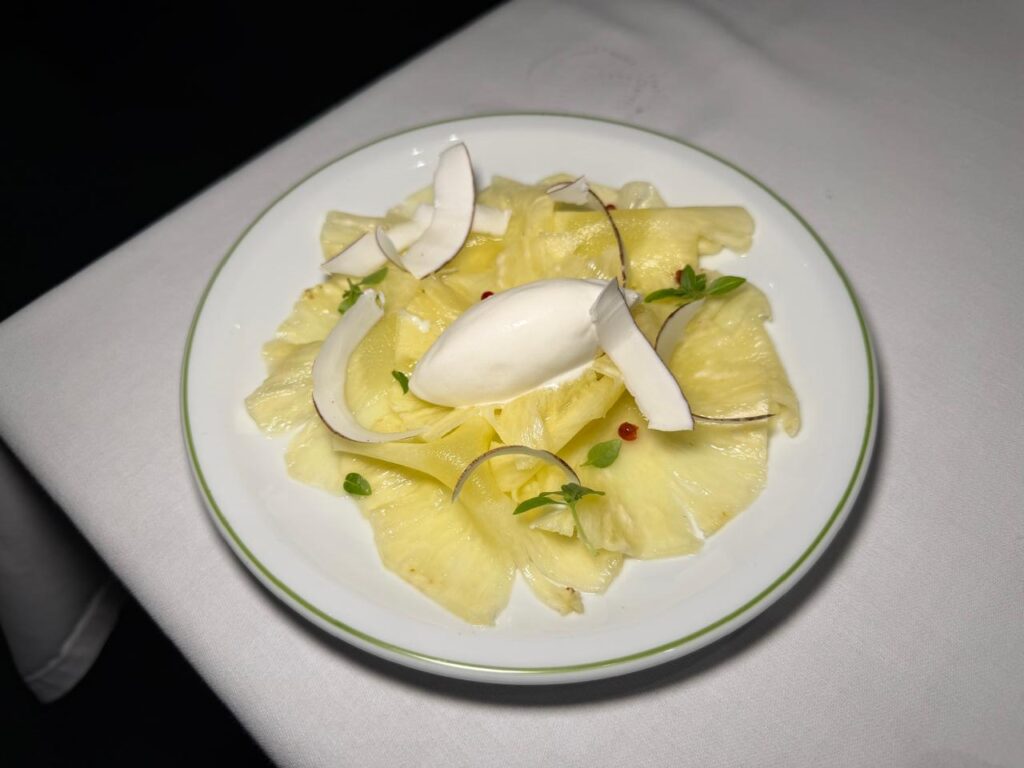
Το carpaccio ανανά, με coconut ice cream και βασιλικό, ήταν η επιτομή της δροσιάς. Ελαφρύ, αρωματικό, καθαρό, με τον βασιλικό να βάζει την πράσινη, αρωματική του υπογραφή. Ένα dessert που έκανε ακριβώς αυτό που έπρεπε στο τέλος ενός μεγάλου δείπνου: καθάρισε τον ουρανίσκο και άφησε πίσω του φρεσκάδα.
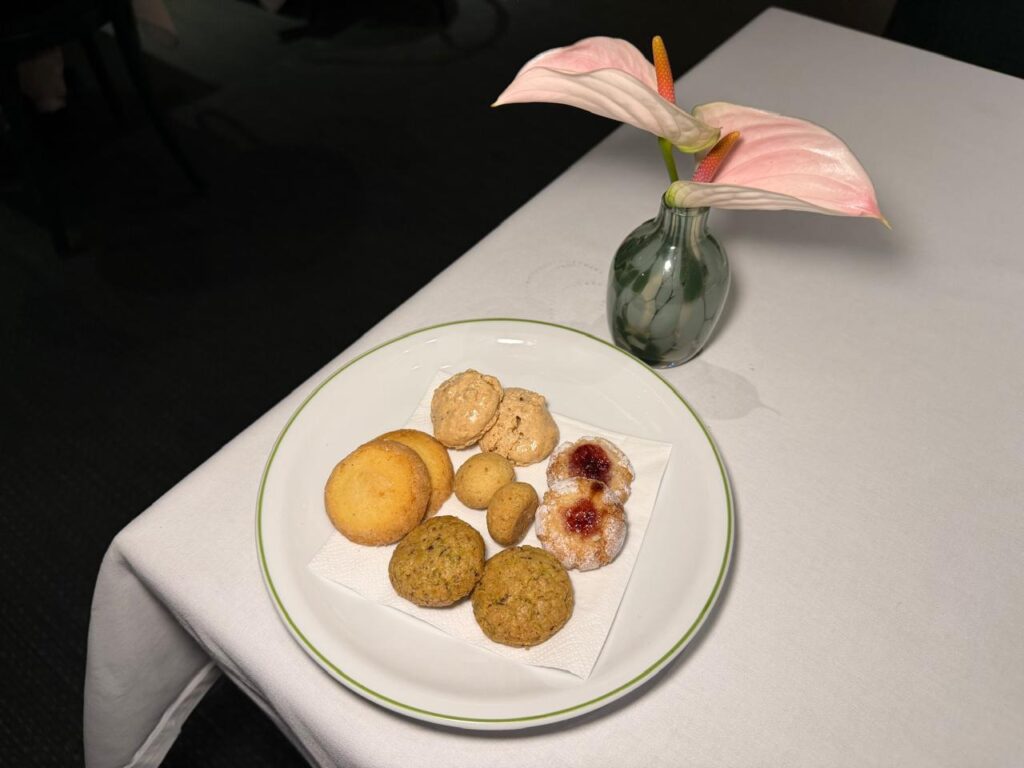
Και φυσικά, σπιτικά, τραγανά cookies με ιταλικό ταμπεραμέντο και ιδανικά για να συνοδεύσουν την τελευταία γουλιά.
Αλλά η τελευταία γουλιά δεν ήταν καθόλου συνηθισμένη.
Μπροστά μας άνοιξε ένα Talosa Vin Santo di Montepulciano DOC 1995.
Και εδώ, θα σου πω κάτι προσωπικό.
Ένιωσα πραγματικά ευλογημένος που είχα την ευκαιρία να ανοίξει μπροστά μου ένα τόσο κορυφαίο και σπάνιο κρασί, με τόσο υψηλό pedigree και βαθμολογία από μερικούς από τους σημαντικότερους οινοκριτικούς του κόσμου. Ένα Vin Santo που έχει περάσει δεκαετίες χτίζοντας χαρακτήρα μέσα στη φιάλη και στα παραδοσιακά caratelli, τα μικρά ξύλινα βαρέλια της Τοσκάνης. Trebbiano, Malvasia και Grechetto, αποξηραμένα σταφύλια, μακρά ωρίμαση και ένα κρασί που στο ποτήρι κουβαλά καρύδι, αποξηραμένο σύκο, σταφίδα, καραμέλα, μέλι, μπαχαρικά και εκείνη τη ζωντανή οξύτητα που δεν το αφήνει να γίνει βαρύ.
Και το καλύτερο;
Δεν χρειαζόταν τίποτα δίπλα του.
Μόνο εμάς, το ποτήρι και λίγη σιωπή.
Κάπου εκεί κατάλαβα ακόμη περισσότερο τι εννοεί το Le Braci όταν μιλά για La Dolce Vita. Δεν είναι μόνο το φαγητό. Είναι η δυνατότητα να σταματήσεις για λίγο, να κοιτάξεις γύρω σου, να απολαύσεις ένα κρασί που έχει ταξιδέψει τριάντα χρόνια, μια μπουκιά tiramisu, να συνομιλήσεις με έναν άνθρωπο που σου εξηγεί με πάθος γιατί διάλεξε αυτή την ετικέτα και μια παρέα που δεν βιάζεται να φύγει.
Και πράγματι, εκείνο το βράδυ στο Le Braci δεν προλάβαινε να αδειάσει τραπέζι. Έφευγε μια παρέα και ερχόταν άλλη. Άνθρωποι που έμοιαζαν να γνωρίζουν το προσωπικό, άλλοι που ήρθαν για ένα δείπνο, άλλοι για κρασί, άλλοι για μια ειδική περίσταση. Και αυτό ίσως είναι ένα από τα μεγαλύτερα κομπλιμέντα που μπορεί να πάρει ένα εστιατόριο.
Να μπορείς να πας μια φορά τον χρόνο για να γιορτάσεις κάτι σημαντικό, αλλά να μπορείς εξίσου εύκολα να πας την Τετάρτη το βράδυ επειδή απλώς θέλεις να φας μια καλή pasta και να πιεις ένα ποτήρι ιταλικό κρασί. Και το καλύτερο, κάθε βδομάδα να είσαι εκεί γιατί ο σεφ και η ομάδα του έχουν για εσένα speciali γευστικές εκπλήξεις, βαλμένες όλες σε μια κάρτα εποχική, εμπλουτισμένη με εμπνευσμένα πιάτα.
Και το Le Braci το πετυχαίνει.
Δεν προσπαθεί να σου αποδείξει πως είναι “fine dining”. Δεν χρειάζεται. Η τεχνική υπάρχει εκεί όπου πρέπει, η πρώτη ύλη είναι πρωταγωνίστρια, τα ζυμαρικά είναι εξαιρετικά, τα κρασιά έχουν βάθος και οι άνθρωποί του ξέρουν πως η φιλοξενία δεν είναι μέρος του δείπνου. Είναι το ίδιο το δείπνο.
Κι όταν τελικά σηκωθήκαμε από το τραπέζι, είχαμε μπροστά μας όλα όσα υποσχέθηκε το Le Braci από την πρώτη στιγμή: αυθεντικότητα, απλότητα, κορυφαίες πρώτες ύλες, ιταλική παράδοση, πολύ κρασί και ανθρώπους που αγαπούν αυτό που κάνουν.
Γι΄ αυτό, σημείωσέ το. Le Braci!
Αν βρεθείς στη Βαρσοβία και αγαπάς την ιταλική, ψαγμένη κουζίνα, δεν χρειάζεται να ψάξεις πολύ. Εκεί, ανάμεσα στο πράσινο της πόλης και τις ιταλικές φιάλες κρασιών, μια μικρή γωνιά της Ιταλίας, έχει βρει το δικό της σπίτι και σε περιμένει!
Górnośląska 24, 00-484 Warsaw, Poland
+48 505 781 202
REVIEW IN ENGLISH
Le Braci. Italian gastronomy the way you would love to experience it, in the heart of Warsaw – Michelin Guide Restaurant
Awarded a Bib Gourmand by the Michelin Guide, listed among the respected names of the Star Wine List, with three sommeliers devoted to the world of wine, an impressive interior that is made for photography and, most importantly, a kitchen that represents the beloved cuisine of Italy in the most delicious way possible – what more could I say to convince you of Le Braci? I honestly don’t know.
Set in one of Warsaw’s greenest and most beautiful corners, beside the area’s expansive green spaces, on the edge of Marshal Edward Rydz-Śmigły Park and close to the Vistula River, Le Braci occupies a neighbourhood where embassies, elegant residences and a quiet sense of old-world sophistication coexist. It is the kind of elegance that never needs to raise its voice to be noticed. Le Braci has its own green oasis, too, with a terrace overflowing with plants, but it is the interior that captures you from the very first moment.
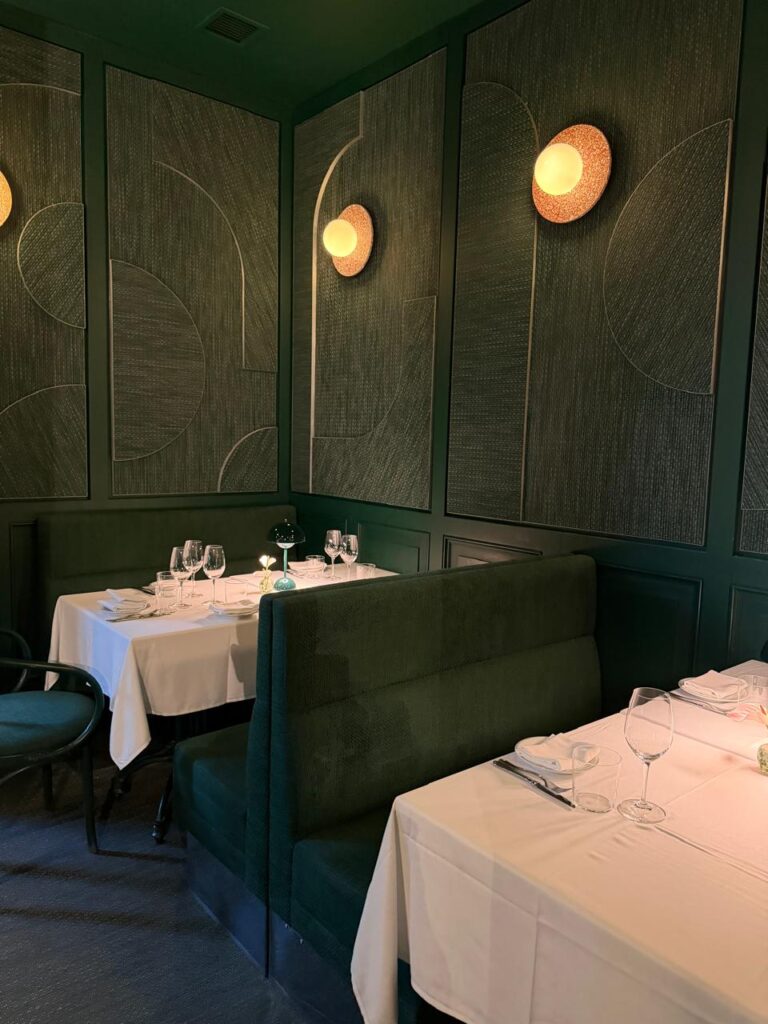
Green everywhere – from the walls to the ceiling and the floor – white tablecloths, red-orange details and a beautiful zinc bar that gives the room a slightly clubby character. And among all this, stylish wine cellars quietly remind you that wine here is not simply an accompaniment. It is part of the restaurant’s gastronomic philosophy.
And now, remember this.
Behind the kitchen is Przemysław Samul, the Polish chef who spent more than 15 years in London, working alongside some highly regarded Italian chefs and gaining experience at, among others, Harry’s Bar, Gordon Ramsay’s Maze, Loulou’s Club and The Berkeley Hotel London. After returning to Poland, he took over the gastronomic direction of Stara Wozownia at Pałac Mała Wieś before eventually taking charge of the kitchen at Le Braci. And let me tell you something from the outset: he knows exactly what he is doing. He has a refined palate and that rare ability to create dishes of real distinction while remaining firmly rooted in the authority and authenticity of Italian cuisine. That, in itself, is quite an achievement.
Our welcome began with a Yacobus Sekt from Winnica Jakubów, made using the traditional method. This Polish sparkling wine proves from the very first sip that Poland now has every reason to command our attention as a wine-producing country. Its second fermentation in bottle and time spent on the lees give it a creamy texture and those delicate bready and yeasty notes one expects from a well-made traditional-method sparkling wine.
Alongside it came a house Negroni, with its sweetness so beautifully balanced that, had I not known about the succession of wines that would follow from the sommeliers, I might very well have ordered another.
We began with the snacks.
Grissini, focaccia and paper-thin pane carasau – all, naturally, handmade – accompanied by excellent extra virgin olive oil from Magrille, produced and bottled exclusively for Le Braci. Then came small Bolognese focaccias, almost like miniature sandwiches, filled with Italian ham and cheese, with truffle making its presence felt just enough without overpowering the other ingredients.
The Ascolane olives, with pancetta at their heart, brought that deliciously crispy indulgence that needs little introduction.
But for me, the crudités with Bagna Cauda sauce were something more. The freshest, most tender vegetables were served with the traditional warm sauce from Piedmont, where the anchovy did not simply shout salt and the garlic did not step forward to dominate the dish. Instead, what emerged was the sea. A clean, refined maritime character. A traditional appetiser that, when executed properly, reminds you why Italian cuisine never needs unnecessary decoration.
And somewhere around here, Riblesso Rosi 2022 from Vallagarina arrived in the glass. With its deep, almost cloudy pink colour, it immediately tells you that it is not here to play the role of an ordinary rosé. Wilder, more vibrant and full of character, it paired beautifully with what followed.
The chilled soup of San Marzano tomatoes with grilled langoustine, tomato brunoise and herbs was a small lesson in the importance of great ingredients. When you have a truly exceptional tomato in front of you, there is no need to hide it. You simply let it speak. And here it spoke clearly – sweetly, with acidity and depth – while the grilled langoustine brought a salty, maritime note and the umami of the grill that tied everything together.
Then came the little skewer of grilled octopus and sausage, a small meeting of land and sea. The octopus and sausage were paired with crushed broccoli, while cuttlefish ink acted as a bridge between the two flavours. What was particularly interesting was that the seasoning of the sausage did not disappear beneath the ink. Instead, the two became one.
And then came the tuna tartare.
One of those dishes that, once you have eaten it, takes you back mentally to the very first bite, simply so you can experience it again. Tuna, aubergine purée, a delicate touch of colatura di alici (the traditional Italian seasoning made from matured anchovies), finely sliced crispy aubergine and, on top, tuna bottarga. Rich, deep and layered, with a salinity that never became intrusive, earthy sweetness and contrasting textures that constantly changed the character of each bite. One of the finest appetisers I have tasted in recent months and, as we were told, a dish that has deservedly remained on the Le Braci menu almost since the restaurant’s very beginning. Here, we were not simply dealing with a good Italian recipe. We were experiencing a kitchen that knows how to take tradition and give it a contemporary pulse.
For the next chapter of the wine journey, two whites went head-to-head with two pasta dishes, and the comparison was fascinating.
Bianco del Casal 2024 from Ca’ La Bionda, from Valpolicella, is a white wine produced in a region that most of us have learned to associate primarily with its great reds. Yet this wine arrived with freshness, fruit and a beautiful sense of structure. Ca’ La Bionda has succeeded in giving Bianco del Casal a character that moves beyond what one might conventionally expect from the region.
Opposite it stood VRH La Castellada Cru 2016. Here, we moved into an entirely different territory. Friuli-Venezia Giulia, Chardonnay and Sauvignon Blanc, two months of skin maceration, years of maturation and an orange wine with body, structure and extraordinary depth.
And now, the pasta.
Homemade al dente tagliatelle – the kind you rarely encounter these days with such precision – provided the foundation for a carbonara with blue lobster, tarragon and olive oil. A combination that might initially make you raise an eyebrow. Then comes the first bite, and the eyebrow comes straight back down. The beautifully cooked lobster, the creamy character of the carbonara, the freshness of the tarragon and the olive oil came together in harmony, with no single ingredient trying to steal the spotlight. A dish that, all by itself, gives you a very good reason to return.
And if the blue lobster carbonara was the great surprise, the bottoncini were the small gastronomic detail that made us smile once again and send our compliments, for the umpteenth time, to the chef and his brigade. Tiny, button-shaped pasta, almost like miniature ravioli, filled with Wagyu beef and served with chanterelles and nero pregiato truffle, accompanied by a little sage crisped in the pan to provide the finishing touch. Small on the plate, huge in flavour. The mushrooms brought earthy depth, the truffle its aromatic veil, while the sage added the gentle peppery crispness needed to balance such a rich dish.
Then, in our glasses, came Batàr Toscana 2016 from Querciabella. And let me tell you something: there are wines you taste, and there are wines you watch evolve in the glass. Batàr belongs to the second category. One of Tuscany’s iconic white wines, made from Chardonnay and Pinot Bianco, it has developed even greater complexity through years of ageing without losing its freshness. Lemon, mandarin, floral notes, almond, saffron and that delicate saline character that keeps the wine alive.
Opposite it came a dish I would describe as both wonderfully homestyle and almost Michelin-level. Tuna steak, lemon sauce, capers and broccoli. The tuna was cooked with remarkable precision – beautifully juicy inside – while the lemon sauce and capers provided the necessary acidity. A flavour that transports you straight to Italy without needing to explain itself. One of those occasions when food does not try to be elaborate. It is simply exceptionally well cooked.
Then we reached the final main course. Its wine companion was Le Macchiole Scrio 2020, a wine that deserves a paragraph of its own. A 100% Syrah from Bolgheri, rare and produced in very limited quantities, it is one of the wines that have succeeded in giving Syrah a distinctive identity in Tuscany. The winery itself considers it a benchmark for the area, while the 2020 vintage has received outstanding reviews, including 97 points from Robert Parker and Jeb Dunnuck and 96 from Vinous and Wine Enthusiast.
Deep and spicy, with black fruit, black olive, pepper and that dark, almost chocolate-like side that makes it so captivating, it was a wine more than capable of standing up to a truly serious piece of meat.
And that piece of meat arrived.
Wagyu rib eye from Namibia. Beautifully seared on the outside and juicy and tender within, with the fat melting exactly as it should. Alongside it came rocket, olives and pepper in a sauce that did something very important. It did not try to steal the spotlight from the meat. It supported it. And in a high-level kitchen, that is a big deal.
In the meantime, studying the wine list, I travelled far and wide. The selection is clearly Italian-centric and covers the entire country, from north to south, with small producers, rare labels and different vintages, but it does not stop there. It also features impressive selections from international vineyards and, importantly, devotes considerable space to the avant-garde of Polish wine.
And behind all this work are three people.
The restaurant’s director and Head Sommelier, Kamila Dzierżawska, with her extensive experience, achieved something that, for me, is perhaps the greatest success a hospitality professional can achieve. She made us feel that she was not simply hosting us in her restaurant. She was welcoming us into her home. A true professional, deeply knowledgeable about wine and food, proud of her work and of her chef, yet without the slightest hint of arrogance. And that authenticity passes directly to the guest.
Mikołaj Borsuk, meanwhile, explained the wine-and-food pairings with genuinely impressive precision, telling us not only what we were drinking, but, more importantly, why that particular wine was in front of that particular dish.
Together with Kamil Świerczyński, they form a trio that gives Le Braci a wine identity far greater than one might expect from what is, on paper, simply an Italian restaurant.
And at this point, dinner could have ended. But it didn’t. Desserts arrived, accompanied by two more wines that gave the end of the evening an almost collector’s quality.
First came the Polish Cydr Chyliczki Cydr Lodowy 2022. Ice cider, naturally sweet, with the concentration of the apple bringing greater intensity and density to the fruit. A beautiful choice for a dessert that does not need to be excessively sweet.
The Le Braci tiramisu was exactly that. Creamy, with a variety of biscuits, gentle sweetness and that familiar Italian comfort that makes you want to take another spoonful before you have even finished the previous one.
The pineapple carpaccio, with coconut ice cream and basil, was the very definition of freshness. Light, aromatic and clean, with basil adding its green, fragrant signature. A dessert that did exactly what it needed to do at the end of a long dinner: cleanse the palate and leave behind a sense of freshness.
And, of course, there were homemade, crisp cookies with an Italian temperament, perfect for accompanying the final sip.
But that final sip was anything but ordinary.
Before us appeared a Talosa Vin Santo di Montepulciano DOC 1995.
And here, let me tell you something personal.
I felt genuinely privileged to have the opportunity to see such a superb and rare wine opened before us, a wine with such impressive pedigree and such high scores from some of the world’s most respected wine critics. A Vin Santo that has spent decades developing its character, first ageing in the traditional Tuscan caratelli, the small wooden casks used for Vin Santo, and then continuing its journey in bottle. Trebbiano, Malvasia and Grechetto, grapes dried before fermentation, long maturation and a wine that brings walnut, dried fig, raisin, caramel, honey and spices to the glass, together with that vibrant acidity that prevents it from ever becoming heavy.
And the best part?
It needed nothing alongside it.
Just us, the glass and a little silence.
Somewhere around that moment, I understood even more clearly what Le Braci means when it talks about La Dolce Vita. It is not just about the food. It is about being able to stop for a while, look around, enjoy a wine that has travelled through three decades, savour a spoonful of tiramisu, talk to someone who passionately explains why they chose that particular bottle, and share the evening with people who are in no hurry to leave.
And indeed, that evening at Le Braci, there was hardly a vacant table. One group left and another arrived. Some seemed to know the staff personally, others had come simply for dinner, some for wine, others for a special occasion. And perhaps that is one of the greatest compliments a restaurant can receive.
To be somewhere you can visit once a year to celebrate something important, but equally somewhere you can walk into on a Wednesday evening simply because you feel like having a good plate of pasta and a glass of Italian wine. And even better, somewhere you can return week after week because the chef and his team keep creating special seasonal surprises, all brought together on an evolving menu filled with inspired dishes.
And Le Braci achieves exactly that.
It does not try to prove that it is “fine dining”. It doesn’t need to. The technique is there where it matters, the ingredients are the protagonists, the pasta is excellent, the wines have depth, and the people understand that hospitality is not a part of the dinner. It is the dinner.
And when we finally rose from the table, we had experienced everything Le Braci had promised from the very beginning: authenticity, simplicity, outstanding ingredients, Italian tradition, plenty of wine and people who genuinely love what they do.
That is why I am telling you: remember Le Braci.
If you find yourself in Warsaw and love thoughtful, sophisticated Italian cuisine, you do not need to look much further. There, among the city’s greenery and the rows of Italian wine bottles, a little corner of Italy has found its own home – and it is waiting for you.
Górnośląska 24, 00-484 Warsaw, Poland
+48 505 781 202


Μια νέα επιλογή για ταξίδια προς τη βρετανική πρωτεύουσα προσθέτει στο δίκτυό της η Cyprus Airways, εγκαινιάζοντας από τις 23 Απριλίου 2027 καθημερινές απευθείας πτήσεις
Η έρευνα για τις καλύτερες χώρες για να ζεις – Nomad Lifestyle Index 2026 – δημοσιεύθηκε από την εταιρεία Nomad Capitalist, η οποία συμβουλεύει επιχειρηματίες
Μας το πρότειναν ως ένα από τα καλά μαγαζιά της Λεμεσού και είπαμε να πάμε. Ιδίως όταν η σύσταση έρχεται από ντόπιο που ξέρει το
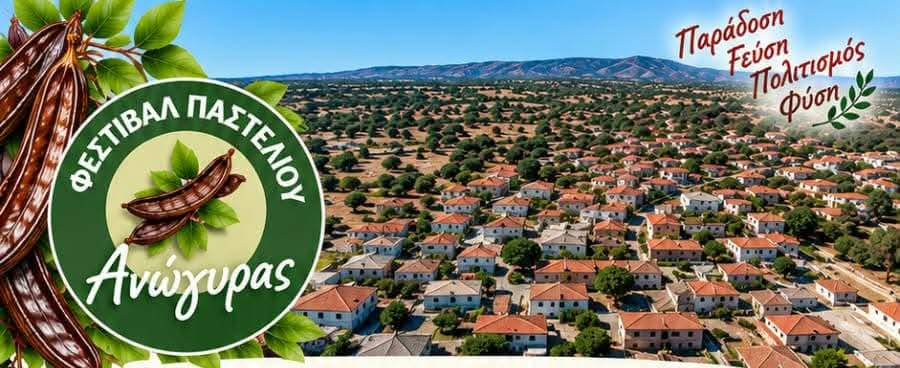
Η Ανώγυρα ετοιμάζεται να υποδεχθεί και φέτος τους φίλους της κυπριακής γαστρονομικής παράδοσης, σε μια γιορτή αφιερωμένη στο παστέλι, το χαρουπόμελο και τον πολύτιμο καρπό
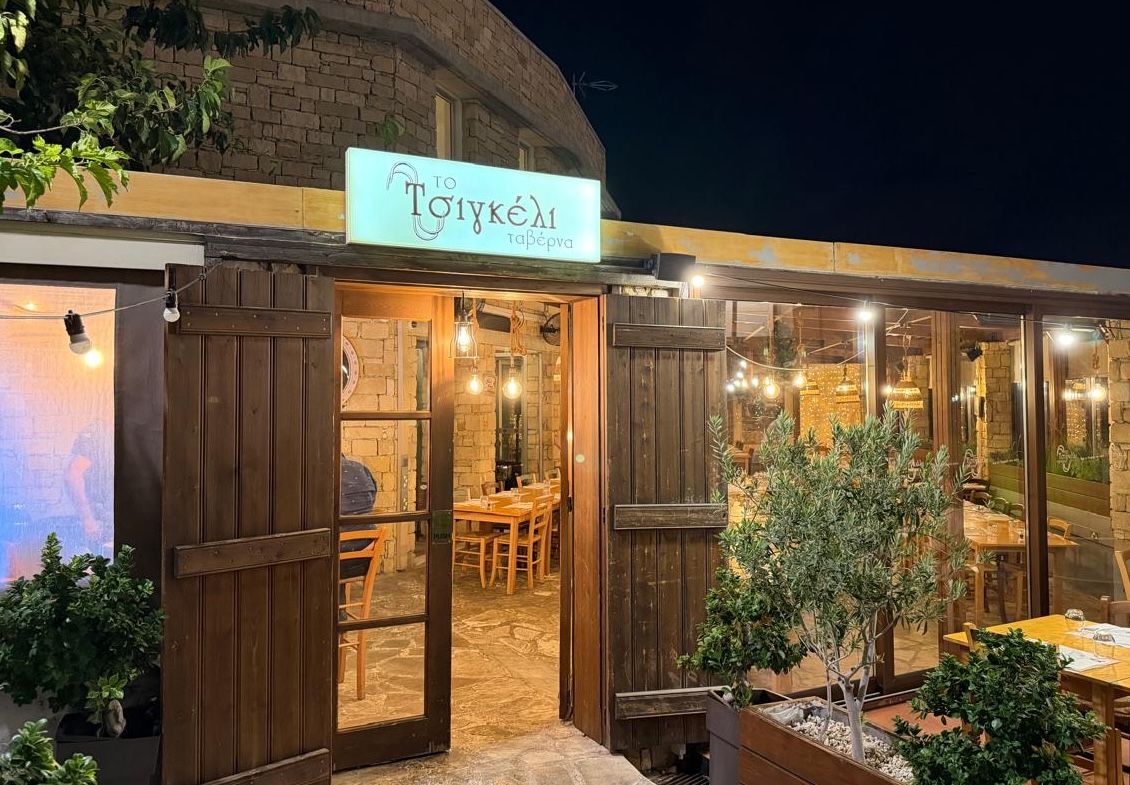
Είναι κάποιες βραδιές που δεν χρειάζονται ιδιαίτερη αφορμή. Μια καλή παρέα, ένα ντόπιο κρασάκι, ένα τραπέζι γεμάτο μεζέδες και άνθρωποι που ξέρουν να σε φιλοξενούν.