Στο κέντρο της Κοπεγχάγης, αλλά ευτυχώς όχι μέσα στον θόρυβο και την πολυκοσμία της πιο τουριστικής της καρδιάς, το Selma βρίσκεται σε μια ήσυχη γωνιά της Rømersgade, μια ανάσα από το Nørreport, τους Κήπους του Βασιλιά και τους Βοτανικούς Κήπους. Μια τοποθεσία που σε βάζει εύκολα στο πρόγραμμα της πόλης και ακόμη ευκολότερα στο γαστρονομικό σου πρόγραμμα σε μια πρωτεύουσα που κάλλιστα μπορεί να χαρακτηριστεί και προορισμός υψηλών προδιαγραφών εστίασης.
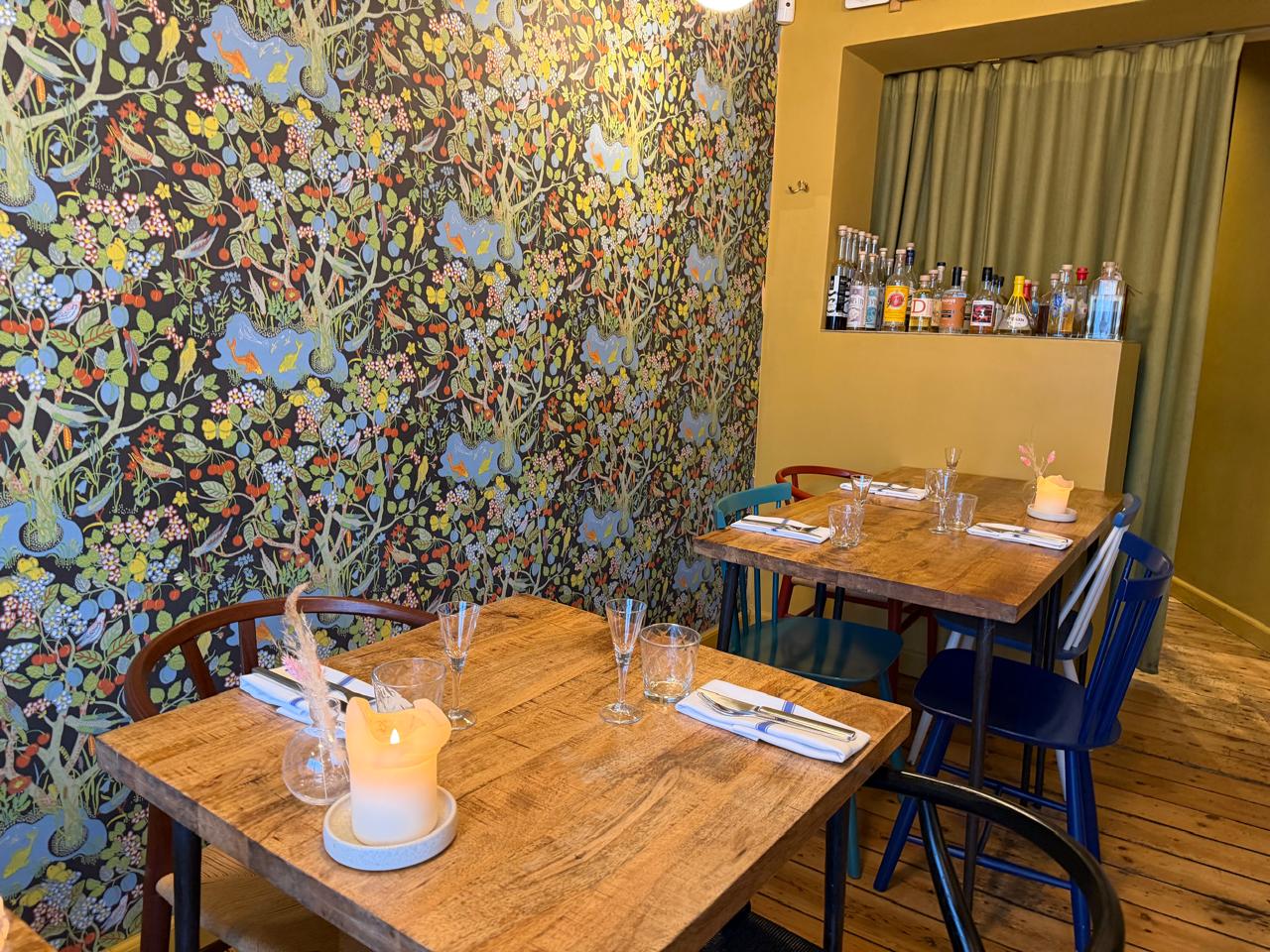
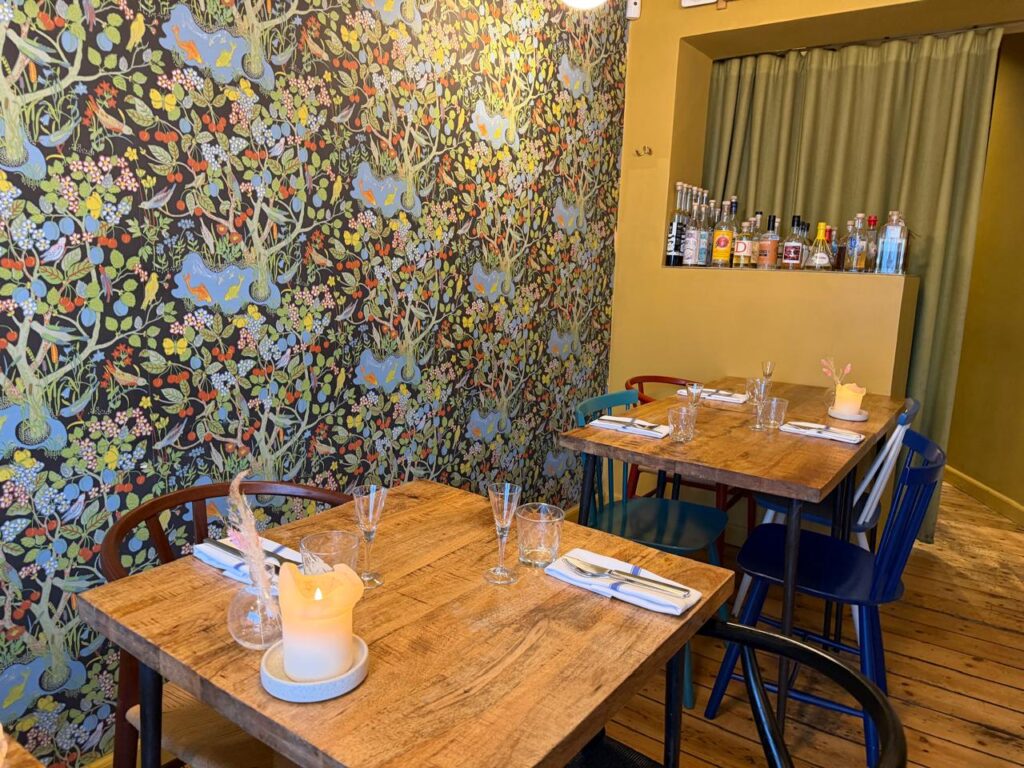
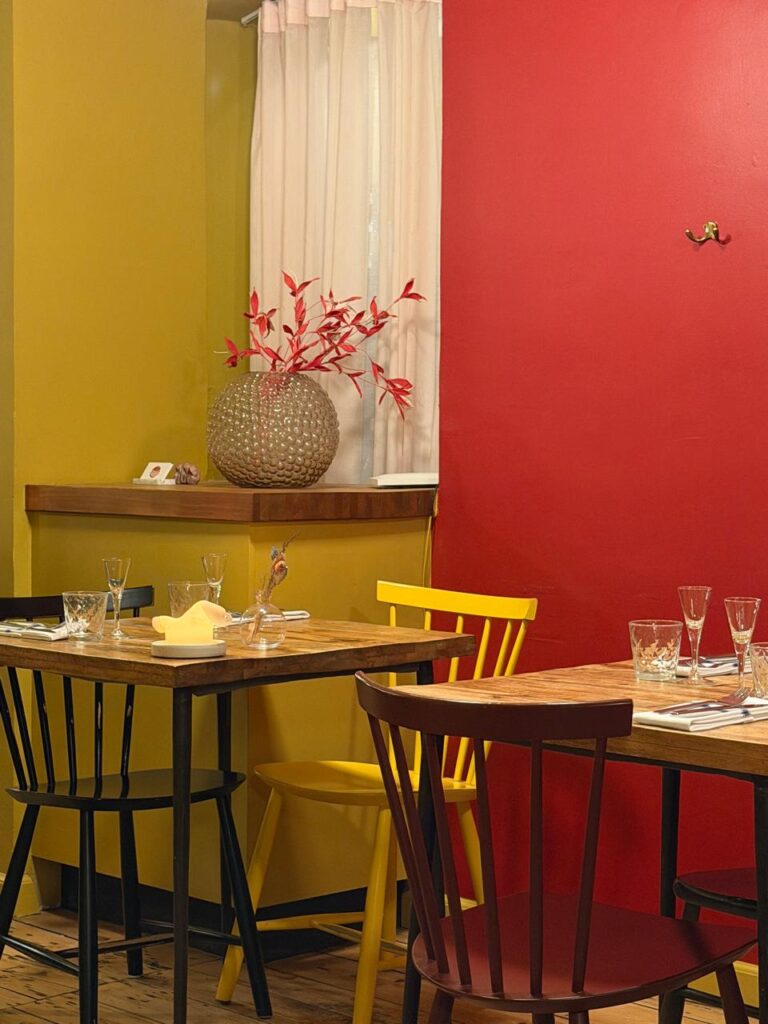
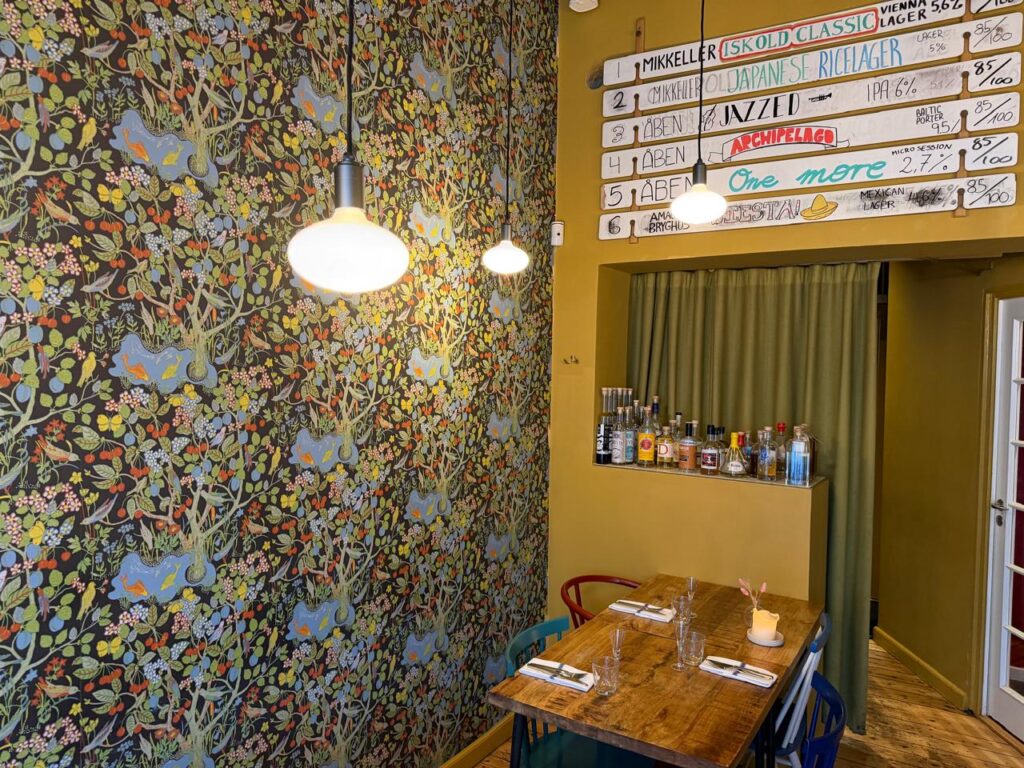
Μπαίνοντας μέσα, το Selma σε κερδίζει χωρίς να προσπαθεί ιδιαίτερα. Έντονα χρώματα, μια εντυπωσιακή, βοτανικών μοτίβων ταπετσαρία που τραβά αμέσως το βλέμμα, ξύλο στα τραπέζια και στο πάτωμα, πολύχρωμες καρέκλες και vintage πινελιές. Χαμηλός φωτισμός, κεριά και υφασμάτινες κουρτίνες συμπληρώνουν ένα σκηνικό ζεστό, φιλόξενο και ανεπιτήδευτα κομψό. Σκανδιναβικό design με παιχνιδιάρικη διάθεση. Χωρίς σοβαροφάνεια. Και αυτό μου αρέσει.
Γιατί, στο Selma, το σοβαρό βρίσκεται αλλού. Βρίσκεται στην κουζίνα.
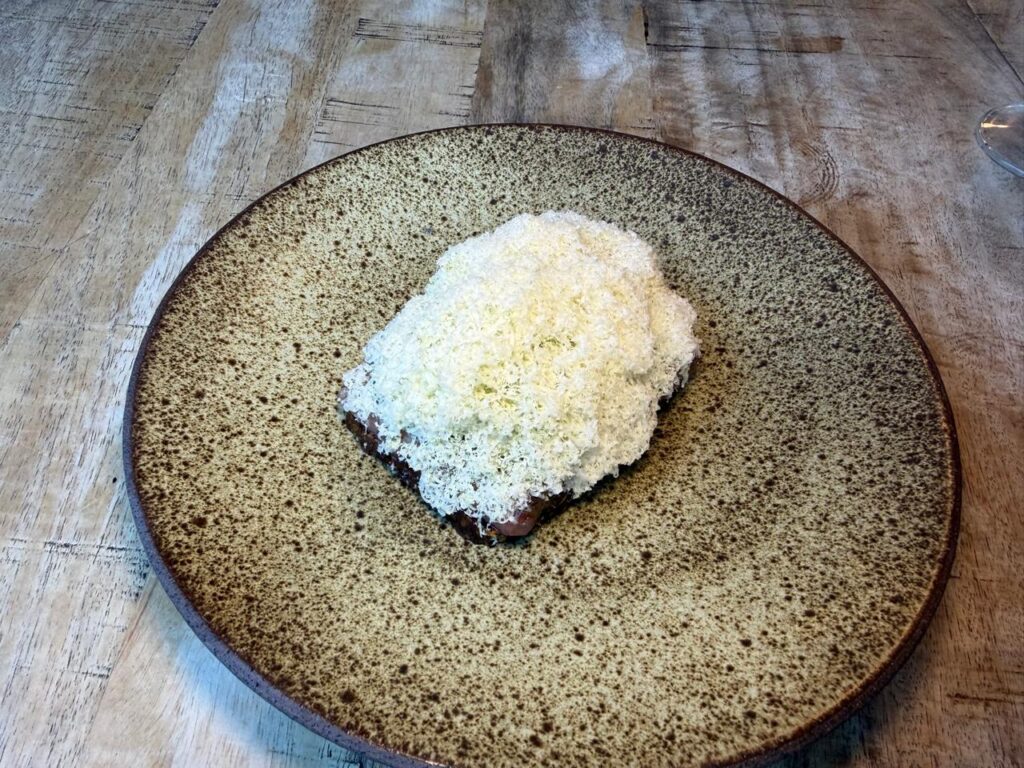
Εδώ η μεγάλη πρωταγωνίστρια είναι η απόλυτη γαστρονομική παράδοση της Δανίας, το smørrebrød. Το γνωστό ανοιχτό δανέζικο σάντουιτς, που ξεκινά συνήθως από μια φέτα καλού ψωμιού και πάνω της μπορεί να χτιστεί ένας ολόκληρος μικρός γαστρονομικός κόσμος. Μόνο που ο Magnus Pettersson, ο Σουηδός σεφ πίσω από το Selma, δεν το αντιμετωπίζει σαν κάτι που πρέπει απλώς να διατηρηθεί όπως ήταν. Το παίρνει, το σέβεται και μετά… του αλλάζει τα φώτα με τον καλύτερο δυνατό τρόπο.
Και κάπως έτσι, το παραδοσιακό smørrebrød αποκτά σύγχρονη, δημιουργική και απίστευτα ανάλαφρη προσωπικότητα.
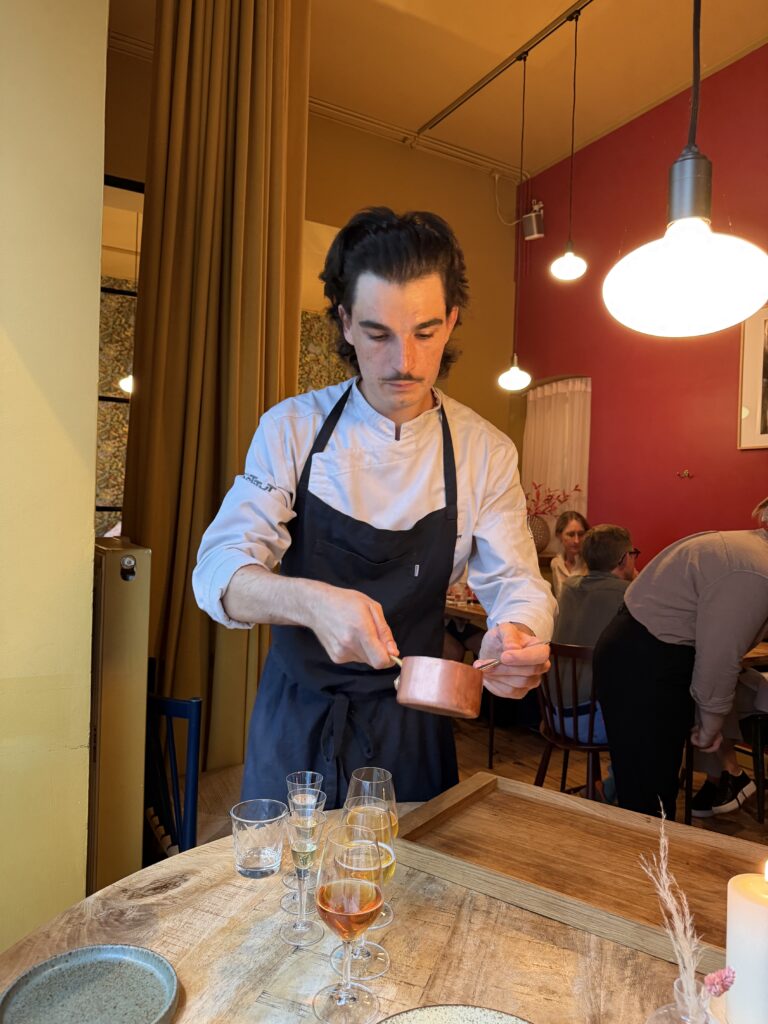
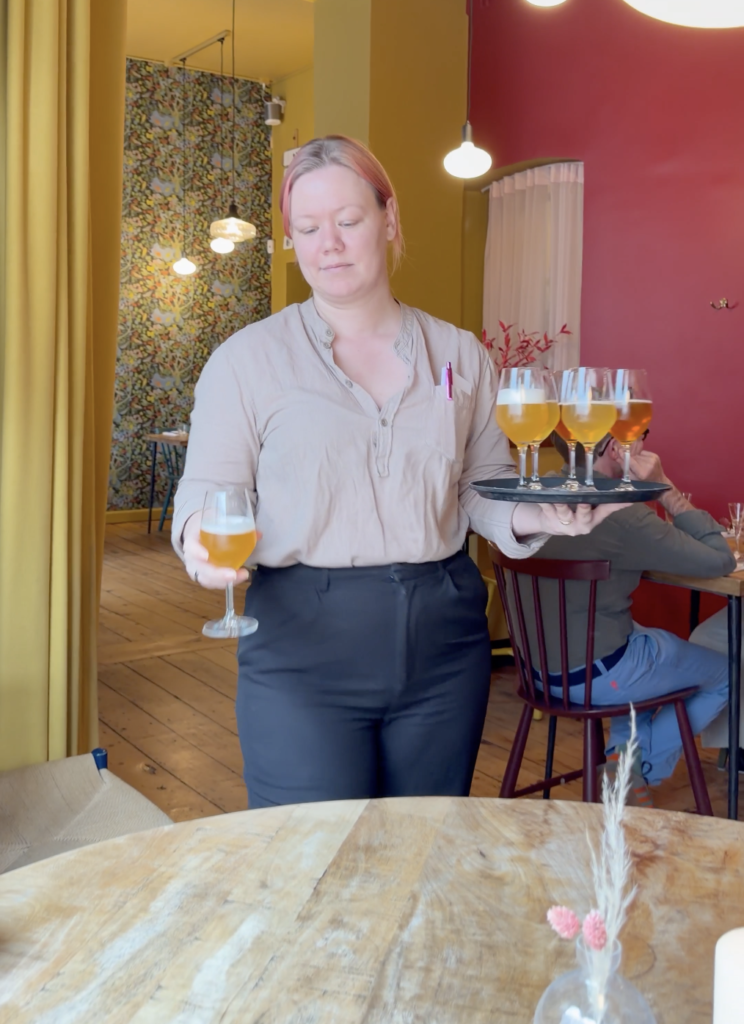
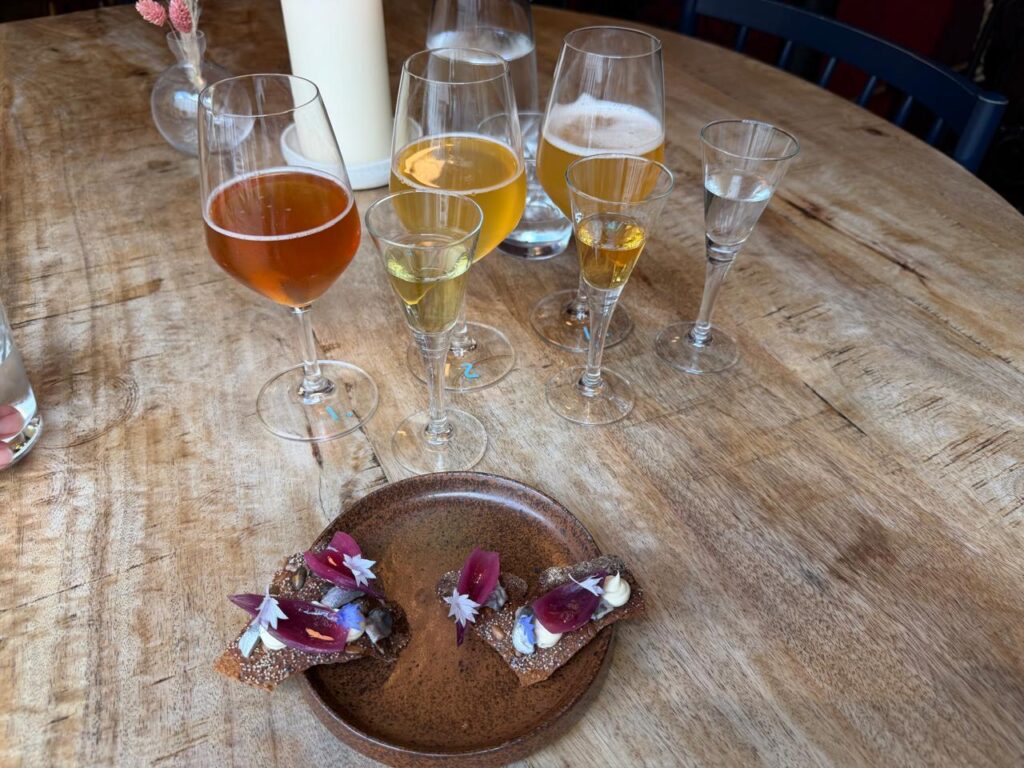
Η διευθύντρια του εστιατορίου μάς προτείνει να ξεκινήσουμε με μια τριάδα από διαφορετικές μπύρες. Μια πιο απλή και δροσερή, μια IPA με περισσότερη ένταση και άλλες πιο πληθωρικές και γεμάτες, για να πάρουμε από την αρχή μια μικρή γεύση από τον κόσμο του Selma. Και σαν να μην έφτανε αυτό, στο τραπέζι έρχεται και μια τριάδα από σπιτικά snaps, φτιαγμένα από την ίδια την ομάδα του εστιατορίου.
Μικρά μπουκαλάκια, το καθένα με τη δική του καρτέλα και τις απαραίτητες πληροφορίες. Τι πίνεις, από τι είναι φτιαγμένο και πώς θα σταθεί δίπλα στο φαγητό. Κι εδώ να σου πω πως τα ταιριάσματα με όσα ακολούθησαν ήταν πραγματικά υπέροχα.
Το καλωσόρισμα ήταν ένα τραγανό tuile με μους ψαρικών και μικροβλαστάρια. Μια μπουκιά όλη κι όλη. Μα τι μπουκιά! Τραγανή, θαλασσινή, φίνα και φρέσκια, σαν ένα μικρό γαστρονομικό νεύμα που σου λέει: κάτσε αναπαυτικά, έχουμε δρόμο.
Και πράγματι.
Τα πιάτα άρχισαν να καταφθάνουν ανά δύο, ώστε κάθε γεύση να συνομιλεί με την επόμενη και κάθε μπουκιά να αφήνει χώρο για την άλλη.
Πρώτα, οι ρέγγες.
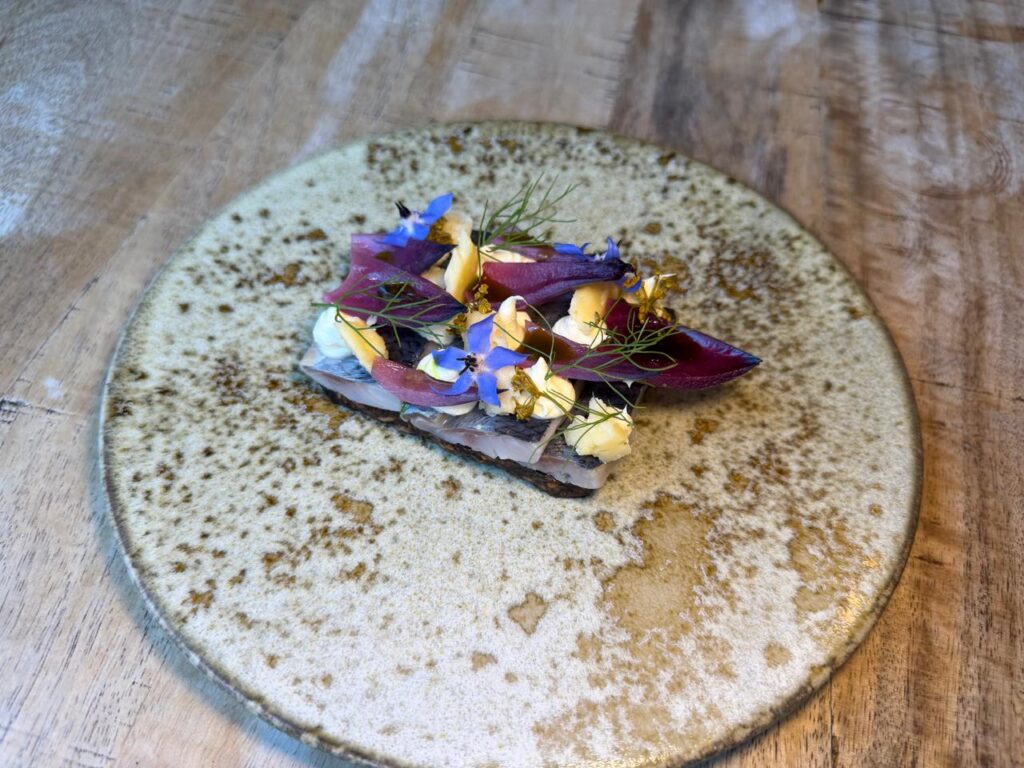
Η ρέγγα με άνηθο, κρεμμύδι τουρσί, τυρί Västerbotten και κρέμα γάλακτος ήταν μια εξαιρετική πρώτη γνωριμία με το smørrebrød του Selma. Αλμυρή όσο πρέπει, δροσερή, κρεμώδης και με τον άνηθο να χαρίζει τη βοτανική του φρεσκάδα. Δίπλα της, η matjes ρέγγα με σκουρόχρωμο βούτυρο, μήλο και αντσούγιες πήγε τη γεύση αλλού. Πιο βαθιά, πιο πλούσια, με το μήλο να προσθέτει τη γλυκύτητα που χρειαζόταν και την αντσούγια να ανεβάζει την ένταση.
Δυο ρέγγες. Δυο διαφορετικοί χαρακτήρες. Και καμία ανάγκη για υπερβολές.
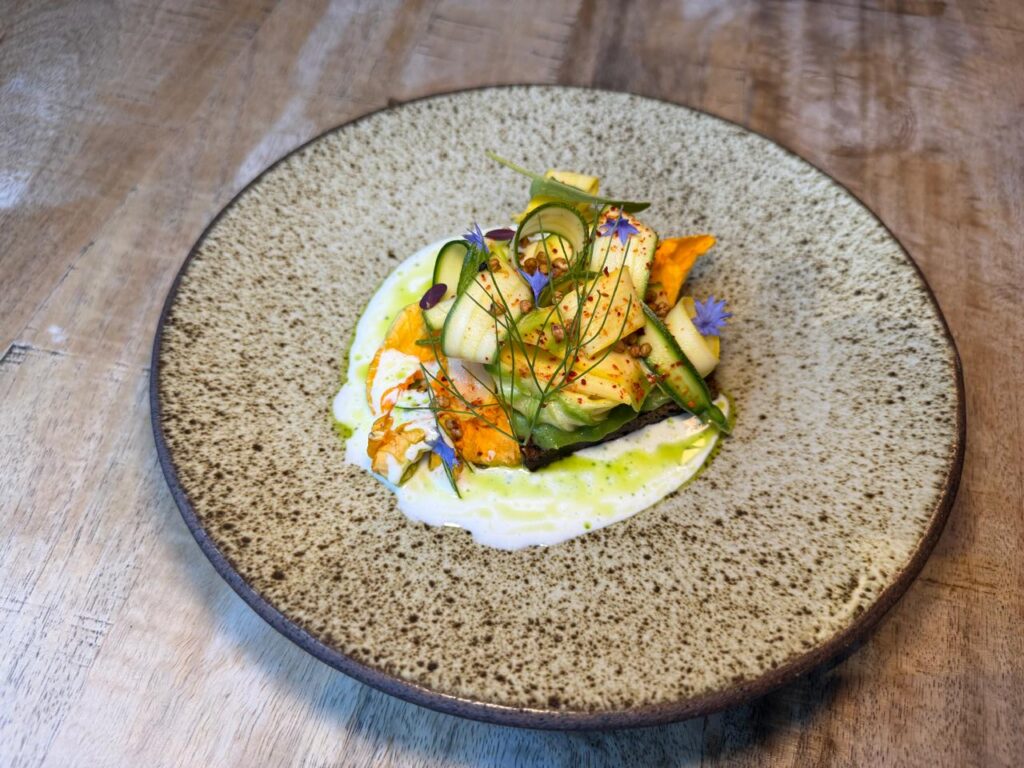
Η συνέχεια ήρθε με μικρά ανθισμένα κολοκυθάκια, μύδια, μέντα και φρέσκο τυρί. Ένα πιάτο που είχε μέσα του θάλασσα, κήπο και καλοκαίρι. Η μέντα έδινε το απαραίτητο lift, ενώ τα μύδια έβαζαν τη θαλασσινή σφραγίδα.
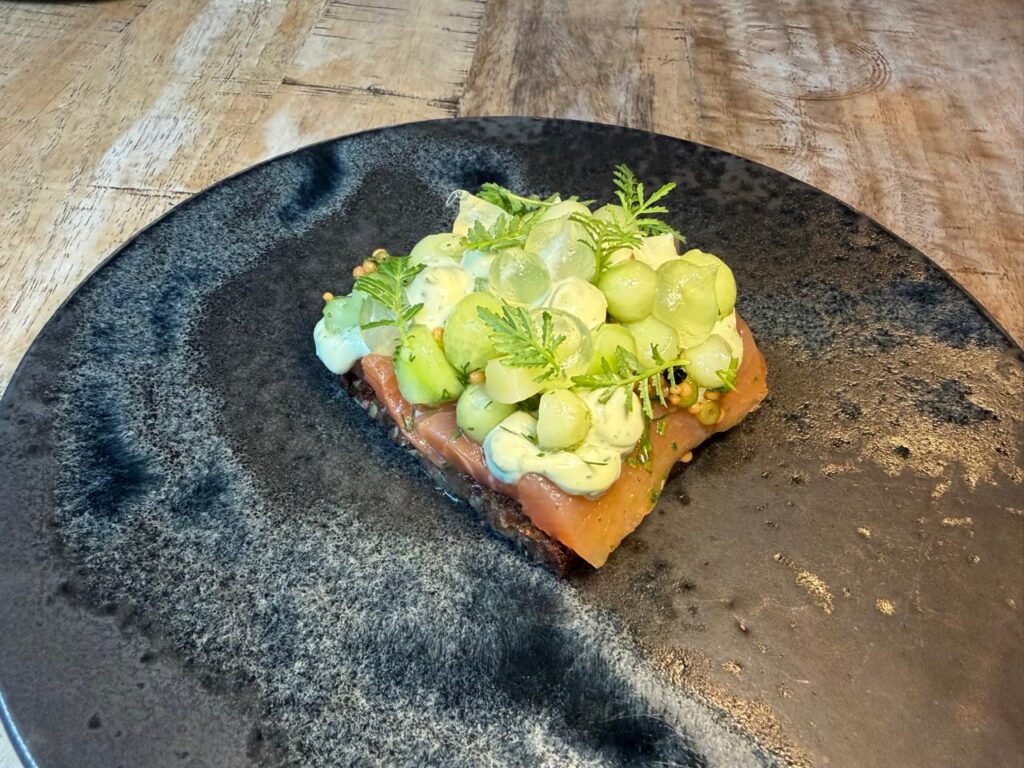
Και μετά ο αλατισμένος με μυρωδικά σολομός από την Ισλανδία. Αγγούρι, άνηθος και σπόροι μουστάρδας δίπλα του, για ένα αποτέλεσμα δροσερό, καθαρό και κομψό. Από εκείνα τα πιάτα που δεν χρειάζονται ούτε μια περιττή πινελιά για να σταθούν.
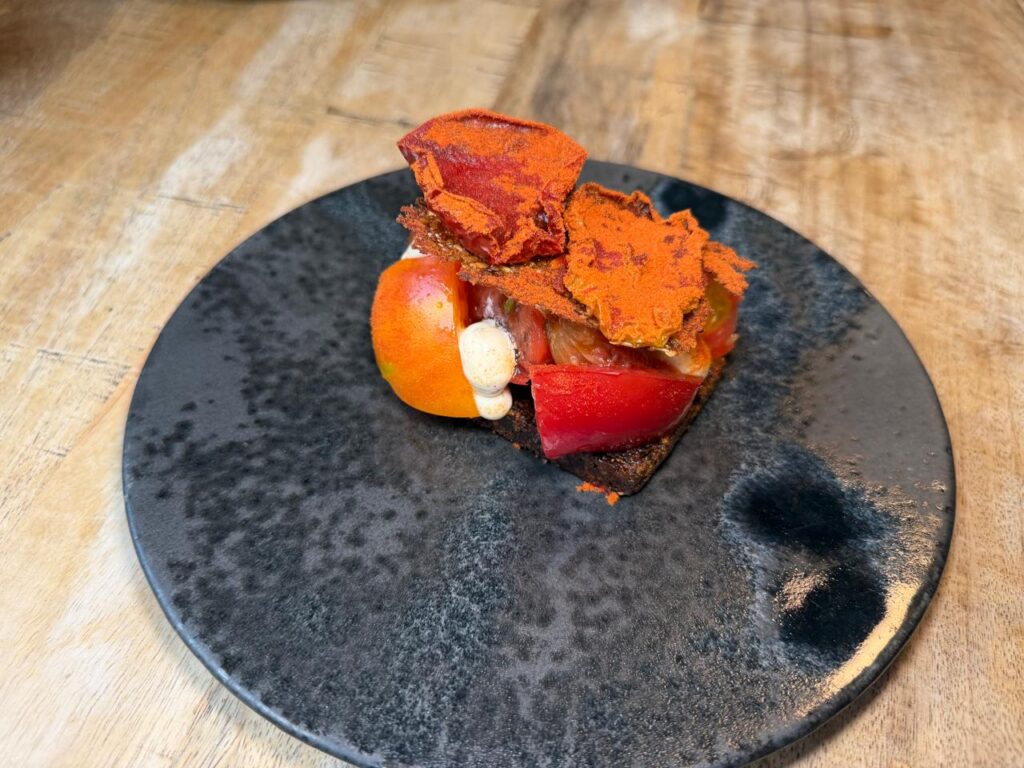
Με τα δανέζικα ντοματίνια, όμως, η κουζίνα μάς έκανε ένα μικρό παιχνίδι. Λεμονοθύμαρο, yuzu και πιπέρι από το Μπουτάν μπήκαν στην εξίσωση και έδωσαν στις ντομάτες μια εντελώς διαφορετική διάσταση. Η οξύτητα, τα αρώματα και η ελαφριά πικάντικη αίσθηση έκαναν μια τόσο καθημερινή πρώτη ύλη να μοιάζει σχεδόν… haute cuisine.
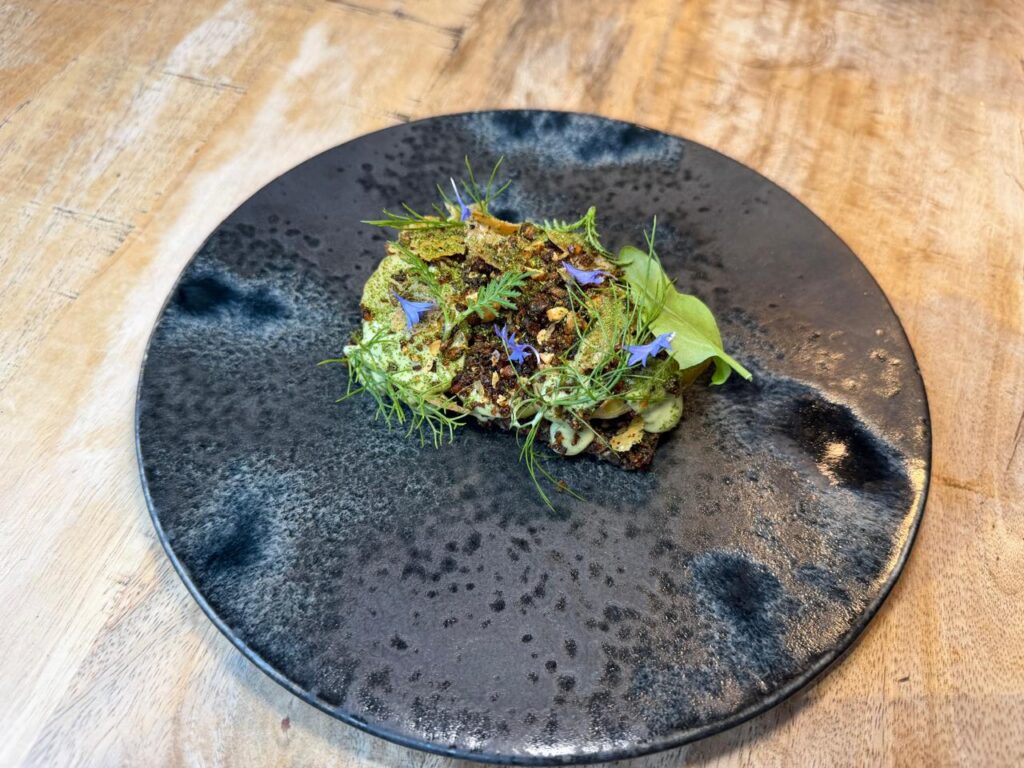
Και μετά, οι baby δανέζικες πατάτες. Λεβιστικό, τραγανή πέτσα κοτόπουλου και φουντούκι. Εδώ, η πατάτα – που πόσες φορές δεν την έχουμε υποτιμήσει; – απέκτησε βάθος, τραγανότητα και μια απρόσμενη νοστιμιά. Comfort food, αλλά με σκανδιναβική ακρίβεια.
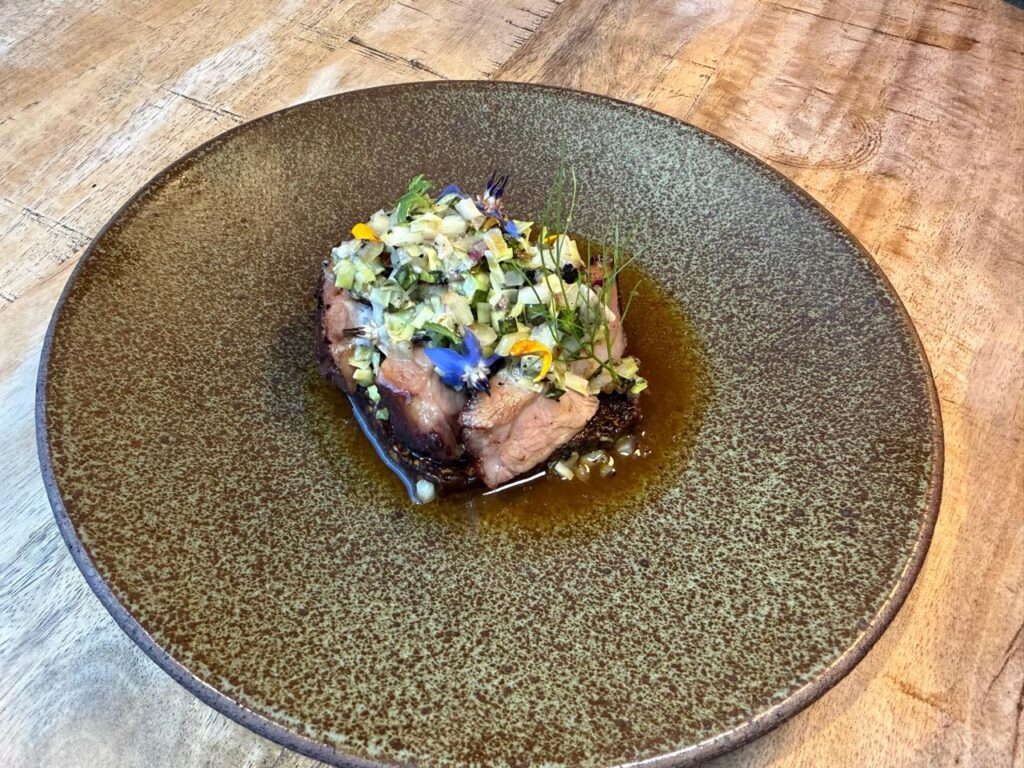
Ο ψητός ωριμασμένος χοιρινός λαιμός ήταν από τα πιάτα που θα θυμάμαι. Τρυφερός, γεμάτος γεύση, με το στρείδι να φέρνει θαλασσινή αλμύρα, το χρένο να σηκώνει την ένταση και το lemon verbena να προσθέτει εκείνη τη λεπτή αρωματική πινελιά που χρειάζεται ένα τόσο γεμάτο κρέας.
Εδώ, πραγματικά, το Selma έδειξε πως ξέρει να ισορροπεί.
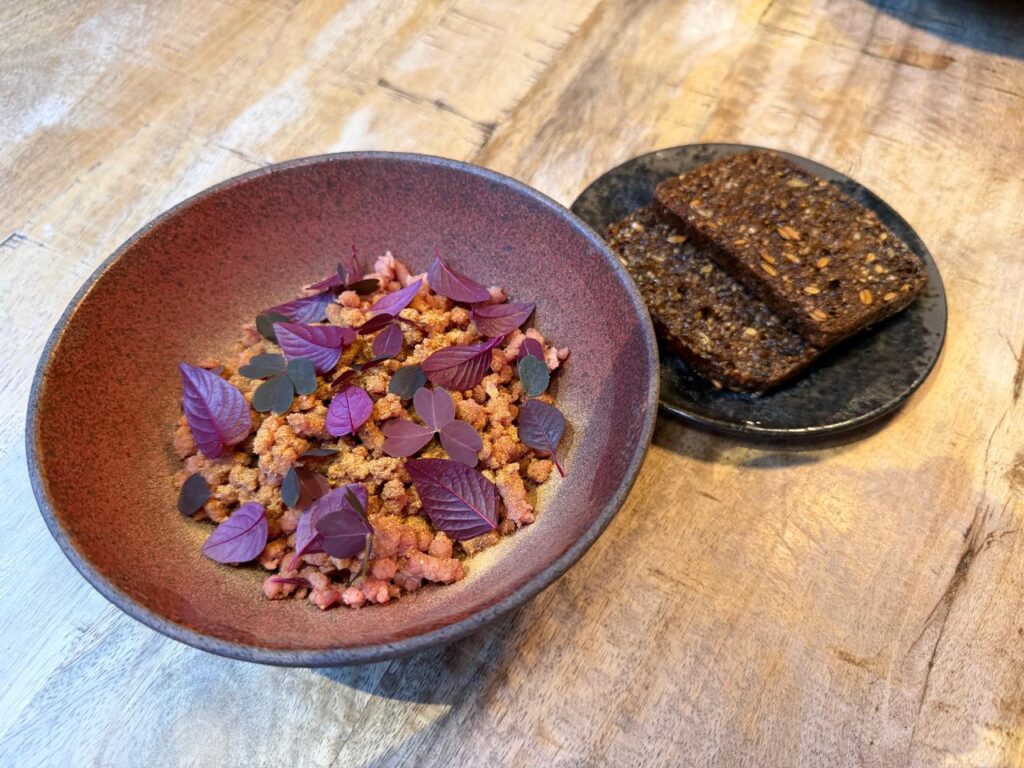
Το ταρτάρ βοδινού, με σχοινόπρασο, θαλάσσια φύκια και σκουμπρί, ολοκλήρωσε την αλμυρή μας περιήγηση. Καθαρή γεύση κρέατος, με τη θάλασσα να μπαίνει στο παιχνίδι με τρόπο που δεν καπελώνει αλλά συμπληρώνει. Ένα ταρτάρ που δεν ακολουθεί την πεπατημένη και γι’ αυτό ακριβώς έχει ενδιαφέρον.
Αυτό που κρατάω περισσότερο από το φαγητό του Selma είναι τα ανάλαφρα πιάτα. Δεν υπάρχει εδώ η ανάγκη να φορτωθεί το κάθε πιάτο με βούτυρο, κρέμες και δέκα διαφορετικά υλικά για να αποδείξει ότι είναι δημιουργικό. Οι γεύσεις είναι καθαρές, οι υφές δουλεμένες, οι συνδυασμοί έξυπνοι και η πρώτη ύλη αφήνεται να μιλήσει.
Και αυτό, για μένα, είναι μεγάλο προσόν. Γιατί άλλο δημιουργικό και άλλο περίπλοκο. Το Selma επιλέγει το πρώτο.
Παρεπιπτόντως για όσους θέλουν να το αφήσουν εντελώς στα χέρια του σεφ, υπάρχει το μενού γευσιγνωσίας. Το μεγάλο μενού κινείται σε οκτώ στάδια, ενώ υπάρχει και μικρότερο τεσσάρων σταδίων, ώστε εσύ να μη χρειάζεται να δυσκολεύεις τη… ζωή σου αποφασίζοντας τι θα φας. Αφήνεις εν λευκώ τη γαστρονομική απόφαση στον σεφ και την ομάδα του και απλώς απολαμβάνεις.
Και κάπου εκεί, όταν νομίζεις πως το αλμυρό ταξίδι τελείωσε, έρχονται τα γλυκά.
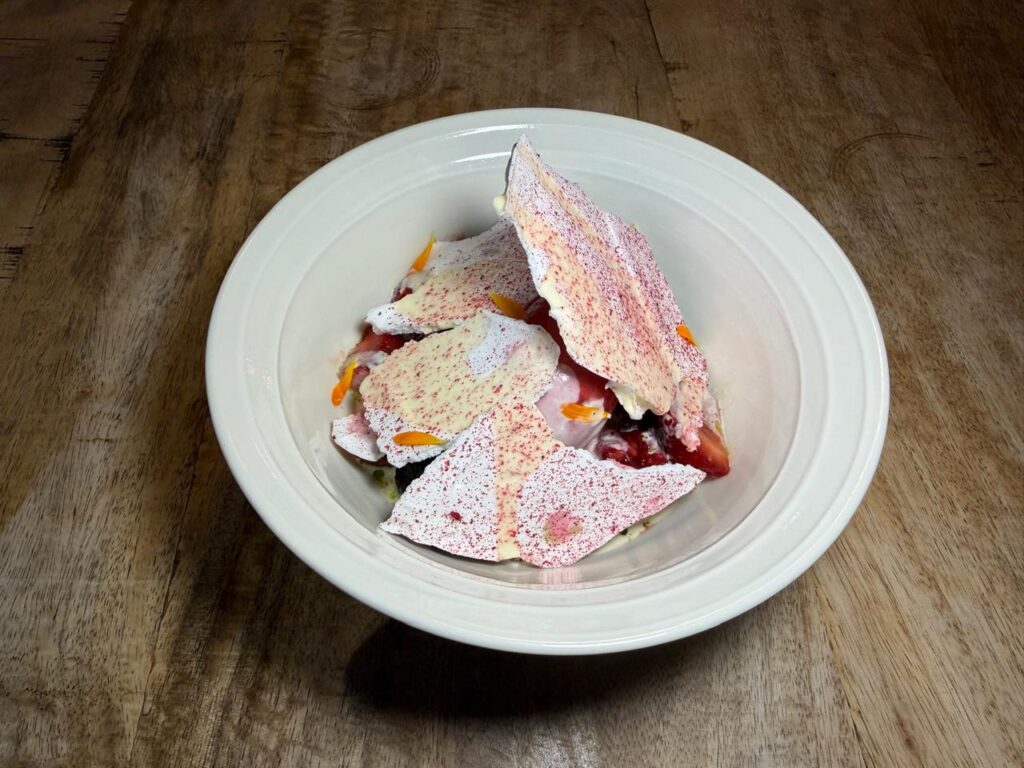
Οι δανέζικες φράουλες με βατόμουρο, κεράσι και μαύρο φραγκοστάφυλο έφεραν μια φρουτώδη, δροσερή και ζωηρή επίγευση.
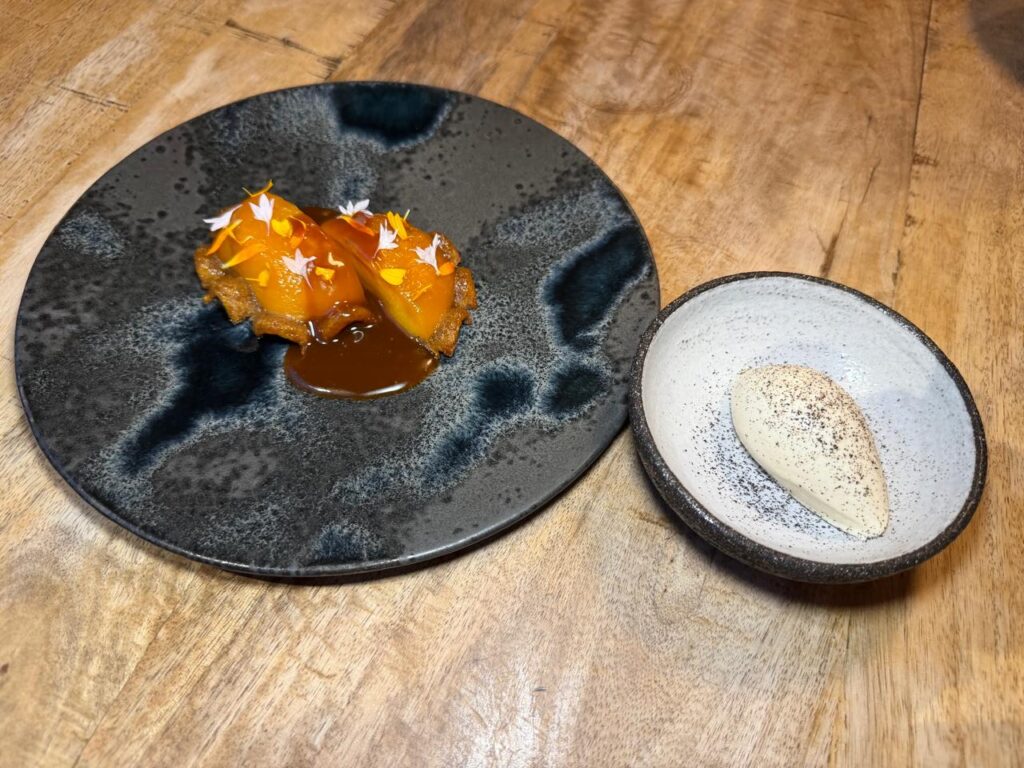
Το καραμελωμένο κίτρινο νεκταρίνι όμως, ήταν το γλυκό που έπαιξε με τα όρια. Μανιτάρια κανθαρέλλες, βανίλια και πιπέρι cubeb δίπλα στο φρούτο. Ένας συνδυασμός που πριν τον δοκιμάσεις μπορεί να σου δημιουργήσει ερωτηματικά. Μετά την πρώτη μπουκιά, όμως, τα ερωτηματικά εξαφανίζονται.
Το σέρβις; Από αυτά που χαίρεσαι να συναντάς. Ευγένεια, επαγγελματισμός, γνώση και – κάτι που για μένα μετρά πολύ – πληροφορία χωρίς διδακτισμό. Η ομάδα ξέρει τι σερβίρει, ξέρει να το εξηγήσει και το κάνει με έναν τρόπο που σε κάνει να θέλεις να ακούσεις.
Και αυτό είναι φιλοξενία.
Το Selma έχει καταφέρει κάτι που δεν είναι καθόλου εύκολο. Να πάρει ένα από τα πιο αναγνωρίσιμα σύμβολα της δανέζικης γαστρονομίας και να το κάνει σύγχρονο, δημιουργικό και διεθνώς ενδιαφέρον, χωρίς να του αφαιρέσει την ψυχή του. Η διάκριση Bib Gourmand του Michelin, την οποία διατηρεί εδώ και χρόνια, δεν είναι τυχαία.
Και τώρα, φεύγοντας από τη Rømersgade, σκέφτομαι πως ίσως αυτό να είναι τελικά το πιο δύσκολο πράγμα στη γαστρονομία.
Να ξέρεις από πού έρχεσαι, χωρίς να φοβάσαι να πας παρακάτω.
Το Selma το κάνει.
Με ρέγγα, σολομό, πατάτες, χοιρινό, ταρτάρ, μπύρες και snaps.
Με πολύ δανέζικη ψυχή.
Και με μια κουζίνα που έχει αποφασίσει να μην κοιτάζει πίσω.
Selma
Rømersgade 20, 1362 København, Denmark
+45 40 27 72 03
REVIEW IN ENGLISH
SELMA. The Copenhagen restaurant where smørrebrød is elevated into modern gastronomy – Michelin Guide Restaurant
In the heart of Copenhagen, yet thankfully away from the noise and crowds of its most touristy quarters, Selma sits quietly on Rømersgade, just a stone’s throw from Nørreport, the King’s Garden and the Botanical Gardens. A location that fits effortlessly into your city itinerary, and even more effortlessly into your gastronomic one, in a capital that can easily be described as a high-end dining destination.
Walking into Selma, you are won over without the restaurant trying particularly hard. Bold colours, striking botanical wallpaper that immediately catches the eye, wooden tables and floors, colourful chairs and vintage touches. Low lighting, candles and fabric curtains complete a setting that feels warm, welcoming and effortlessly elegant. Scandinavian design with a playful spirit. No pretension. And I like that.
Because at Selma, the serious business happens elsewhere.
In the kitchen.
Here, the great protagonist is one of Denmark’s most cherished culinary traditions: smørrebrød. The famous Danish open-faced sandwich, usually built on a slice of good bread and transformed into an entire little gastronomic world. Except that Magnus Pettersson, the Swedish chef behind Selma, does not treat it as something that simply needs to be preserved exactly as it was. He takes it, respects it and then… gives it a thoroughly modern twist.
And that is how traditional smørrebrød acquires a contemporary, creative and remarkably light personality.
The restaurant director suggested that we begin with a trio of different beers. One simple and refreshing, one with the character of an IPA, and others fuller and more generous, allowing us to get an early taste of the Selma experience. And, as if that were not enough, a trio of homemade snaps, made by the restaurant’s own team, soon arrived at our table.
Small bottles, each accompanied by its own card with all the information we needed. What we were drinking, what it was made from and how it would work alongside the food. And let me tell you, the pairings with what followed were absolutely delightful.
The welcome bite was a crisp tuile with seafood mousse and micro herbs. One bite, nothing more. But what a bite! Crisp, briny, delicate and fresh, like a little gastronomic wink telling you: sit back, there is plenty more to come.
And indeed there was.
The dishes began arriving two at a time, allowing each flavour to converse with the next and every bite to leave room for another.
First came the herrings.
The Dill herring, with pearl onions, Västerbotten and crème fraîche, was an excellent introduction to Selma’s interpretation of smørrebrød. Salty enough, cool, creamy, with the dill bringing its unmistakable herbal freshness. Beside it, the Matjes herring with brown butter, apple and anchovies took the flavour in an entirely different direction. Deeper, richer, with the apple providing the sweetness it needed and the anchovies adding another layer of intensity.
Two herrings. Two completely different personalities. And not a hint of unnecessary excess.
Next came the Small flowering zucchini with mussels, mint and fresh cheese. A dish that seemed to contain the sea, the garden and summer all at once. The mint provided the necessary lift, while the mussels brought their unmistakable taste of the sea.
Then came the Herb salted salmon from Iceland, with cucumber, dill and mustard seed. Fresh, clean and elegant. One of those dishes that needs not a single unnecessary flourish to make its point.
With the Danish tomatoes, however, the kitchen played a little game with us. Lemon thyme, yuzu and Bhutan pepper entered the equation, giving the tomatoes an entirely different dimension. Acidity, fragrance and a gentle spiciness transformed such an everyday ingredient into something that came remarkably close to haute cuisine.
And then came the New Danish potatoes. Lovage, chicken skin and hazelnut. Here, the humble potato – how often do we underestimate it? – acquired depth, crispness and an unexpected savouriness. Comfort food, but with Scandinavian precision.
The Grilled matured pork neck was one of those dishes I will remember. Tender, full of flavour, with oyster bringing a touch of the sea, horseradish lifting the intensity and lemon verbena adding that delicate aromatic note that a rich cut of meat needs.
Here, Selma really showed how well it understands balance.
The Tatar of beef, with chives, sea lettuce and mackerel, completed our savoury journey. Clean-tasting beef, with the sea entering the picture in a way that complements rather than overwhelms. A tartare that refuses to follow the usual path, and that is precisely what makes it interesting.
What I take away most from Selma’s food is its lightness.
There is no need here to load every dish with butter, cream and ten different ingredients simply to prove that it is creative. The flavours are clean, the textures carefully considered, the combinations intelligent, and the ingredients are allowed to speak for themselves.
And to me, that is a major strength.
Because creative and complicated are two very different things.
Selma chooses the former.
For those who prefer to leave everything entirely in the chef’s hands, there is also a tasting menu. The larger menu unfolds over eight courses, while a shorter four-course version is available for those who would rather not spend too much time making decisions about what to eat. Leave the gastronomic choices entirely to the chef and his team, and simply enjoy the ride.
And just when you think the savoury journey is over, dessert arrives.
The Danish strawberries, with raspberry, cherry and blackcurrant, brought a fruity, refreshing and lively finish.
The Caramelized yellow nectarine, however, was the dessert that pushed the boundaries. Chanterelle, vanilla and cubeb pepper alongside the fruit. A combination that might raise a few eyebrows before you taste it. After the first bite, however, the questions disappear.
The service? The kind you are genuinely happy to encounter. Warmth, professionalism, knowledge and – something that matters greatly to me – information without being lectured. The team knows what they are serving, knows how to explain it, and does so in a way that makes you want to listen.
And that is hospitality.
Selma has achieved something that is far from easy: taking one of the most recognisable symbols of Danish gastronomy and making it contemporary, creative and internationally relevant, without taking away its soul. Its Michelin Bib Gourmand recognition, which it has held for years, is certainly no coincidence.
And now, leaving Rømersgade, I find myself thinking that perhaps this is one of the hardest things to achieve in gastronomy.
To know where you come from, without being afraid to move forward.
Selma does exactly that.
With herring, salmon, potatoes, pork, tartare, beer and snaps.
With a very Danish soul.
And with a kitchen that has decided not to look back.
Selma
Rømersgade 20, 1362 København, Denmark
+45 40 27 72 03